Verb Agreement with the Subject
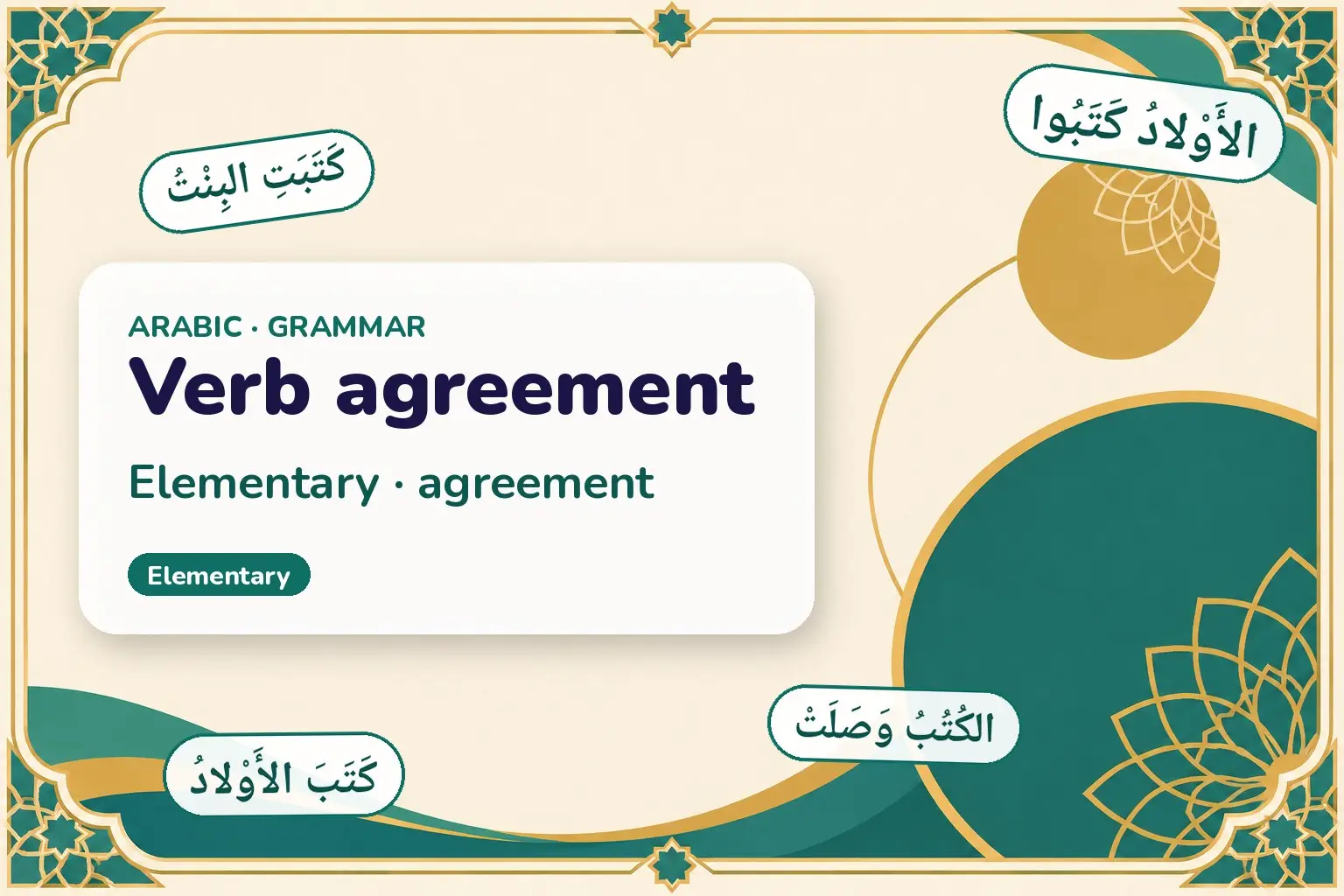
A verb placed before its subject stays singular and agrees only in gender, so كَتَبَ الأَوْلادُ (kataba l-awlādu) means 'the boys wrote'. Move the subject in front and the verb agrees in full: الأَوْلادُ كَتَبُوا (al-awlādu katabū).
Level: Elementary. In Arabic the verb changes shape to match its subject, but how much it matches depends on word order. Put the verb first and it agrees only in gender, staying singular: كَتَبَ الأَوْلادُ kataba l-awlādu (“the boys wrote”). Put the subject first and the verb agrees in gender and number: الأَوْلادُ كَتَبُوا al-awlādu katabū.
The rule
Agreement means the verb carries endings that match its subject. Arabic has two patterns, set by which word comes first:
- Verb first (the verbal sentence). The verb comes before its subject — الفَاعِل (al-fāʿil), the doer — and agrees in gender only. It stays singular however many people the subject names: لَعِبَ الأَوْلادُ laʿiba l-awlādu (“the boys played”), with a singular verb before the plural noun.
- Subject first (the nominal sentence). The subject comes before the verb, and the verb now agrees in full — both gender and number. “The boys played” becomes الأَوْلادُ لَعِبُوا al-awlādu laʿibū, with the plural ending ـوا (ū) on the verb.
So the quick test is: verb before subject → singular verb; subject before verb → full agreement.
Gender always agrees
Gender agreement is required in both orders. A feminine subject puts the feminine marker ـتْ (a tāʾ, pronounced -at) on the past-tense verb:
| Order | Arabic | Reading | English |
|---|---|---|---|
| verb first, masc. | كَتَبَ الوَلَدُ | kataba l-waladu | the boy wrote |
| verb first, fem. | كَتَبَتِ البِنْتُ | katabat il-bintu | the girl wrote |
| verb first, masc. pl. | كَتَبَ الأَوْلادُ | kataba l-awlādu | the boys wrote (singular verb) |
| subject first, masc. pl. | الأَوْلادُ كَتَبُوا | al-awlādu katabū | the boys wrote (plural verb) |
| subject first, dual | الوَلَدانِ كَتَبَا | al-waladāni katabā | the two boys wrote |
| subject first, fem. pl. | البَنَاتُ كَتَبْنَ | al-banātu katabna | the girls wrote |
Notice the verb shape: verb-first it changes only for gender (كَتَبَ kataba → كَتَبَتْ katabat); subject-first it also shows number — dual ـَا (ā), masculine plural ـوا (ū), feminine plural ـنَ (na).
The non-human plural rule
Arabic treats the plural of a non-human thing — books, cars, houses — as a feminine singular. Whatever the order, the verb (and any adjective) is feminine singular:
- الكُتُبُ وَصَلَتْ al-kutubu waṣalat — “the books arrived”.
- السَّيَّارَاتُ تَوَقَّفَتْ as-sayyārātu tawaqqafat — “the cars stopped”.
This surprises learners, who expect a plural verb. Remember: only people (rational beings) trigger a plural verb; objects and animals in the plural take هِيَ hiya (“she”) agreement.
Example sentences
- كَتَبَ الوَلَدُ.kataba l-waladu.The boy wrote.verb first, masculine
- كَتَبَتِ البِنْتُ.katabat il-bintu.The girl wrote.feminine verb: -at
- لَعِبَ الأَوْلادُ.laʿiba l-awlādu.The boys played.verb first stays singular
- الأَوْلادُ لَعِبُوا.al-awlādu laʿibū.The boys played.subject first: plural -ū
- وَصَلَتِ الطَّائِرَةُ.waṣalat iṭ-ṭāʾiratu.The plane arrived.feminine subject
- البِنْتَانِ كَتَبَتَا.al-bintāni katabatā.The two girls wrote.feminine dual: -atā
- الوَلَدَانِ كَتَبَا.al-waladāni katabā.The two boys wrote.masculine dual: -ā
- البَنَاتُ كَتَبْنَ.al-banātu katabna.The girls wrote.feminine plural: -na
- الكُتُبُ وَصَلَتْ.al-kutubu waṣalat.The books arrived.non-human plural = feminine singular
- السَّيَّارَاتُ تَوَقَّفَتْ.as-sayyārātu tawaqqafat.The cars stopped.objects take a feminine verb
- ذَهَبَ الطُّلّابُ.dhahaba ṭ-ṭullābu.The students went.verb first, singular
- الطُّلّابُ ذَهَبُوا.aṭ-ṭullābu dhahabū.The students went.subject first, plural
- نَامَتِ الأُمُّ.nāmat il-ummu.The mother slept.feminine subject
- جَلَسَ الرِّجَالُ.jalasa r-rijālu.The men sat down.verb first, singular
- الرِّجَالُ جَلَسُوا.ar-rijālu jalasū.The men sat down.subject first, plural
- تَلْعَبُ البَنَاتُ.talʿabu l-banātu.The girls are playing.present, verb first, feminine singular
- البَنَاتُ يَلْعَبْنَ.al-banātu yalʿabna.The girls are playing.present, subject first, feminine plural
Common mistakes
- ❌ لَعِبُوا الأَوْلادُ (laʿibū l-awlādu) → ✅ لَعِبَ الأَوْلادُ (laʿiba l-awlādu). A verb before its subject stays singular.
- ❌ كَتَبَ البِنْتُ (kataba l-bintu) → ✅ كَتَبَتِ البِنْتُ (katabat il-bintu). A feminine subject needs the -at ending.
- ❌ الأَوْلادُ كَتَبَ (al-awlādu kataba) → ✅ الأَوْلادُ كَتَبُوا (al-awlādu katabū). Subject first means full agreement, so add the plural -ū.
- ❌ الكُتُبُ وَصَلُوا (al-kutubu waṣalū) → ✅ الكُتُبُ وَصَلَتْ (al-kutubu waṣalat). A non-human plural takes a feminine singular verb, not a human plural.
- ❌ الوَلَدَانِ كَتَبُوا (al-waladāni katabū) → ✅ الوَلَدَانِ كَتَبَا (al-waladāni katabā). Two people take the dual -ā, not the plural -ū.
A short conversation
— هُدَى (Hudā): مَاذَا فَعَلَ الطُّلّابُ؟ — Mādhā faʿala ṭ-ṭullābu? — What did the students do? — عُمَر (ʿUmar): الطُّلّابُ كَتَبُوا الدَّرْسَ، وَوَصَلَتِ الكُتُبُ الجَدِيدَةُ. — Aṭ-ṭullābu katabū d-darsa, wa-waṣalat il-kutubu l-jadīdatu. — The students wrote the lesson, and the new books arrived. — هُدَى (Hudā): وَالبَنَاتُ؟ — Wa-l-banātu? — And the girls? — عُمَر (ʿUmar): البَنَاتُ قَرَأْنَ كَثِيرًا. — Al-banātu qaraʾna kathīran. — The girls read a lot.
Notice katabū and qaraʾna (subject first, full agreement) beside waṣalat (the non-human plural al-kutubu).
Usage notes
- The present tense works the same way. Verb first and singular: يَلْعَبُ الأَوْلادُ (yalʿabu l-awlādu); subject first and plural: الأَوْلادُ يَلْعَبُونَ (al-awlādu yalʿabūna).
- A pronoun subject is inside the verb. You do not add a separate word: كَتَبُوا (katabū) already means “they wrote”. The separate noun appears only when you name the doers.
- Adjectives follow the same rational/non-rational split. New books are كُتُبٌ جَدِيدَةٌ (kutubun jadīdatun, feminine singular adjective), while new students are طُلّابٌ جُدُدٌ (ṭullābun judud, a human plural adjective).
- Formal Arabic prefers the verb first. News and writing favour the verbal sentence; everyday speech often puts the subject first, which is why the full-agreement forms are worth drilling too.
Compared with word order
Agreement is the other half of word order. The Arabic verbal sentence sets the Verb-Subject-Object order where the verb stays singular; the Arabic nominal sentence starts with the noun, which is exactly when the verb takes full number agreement. Learn the two orders together, then browse the wider Arabic grammar section.
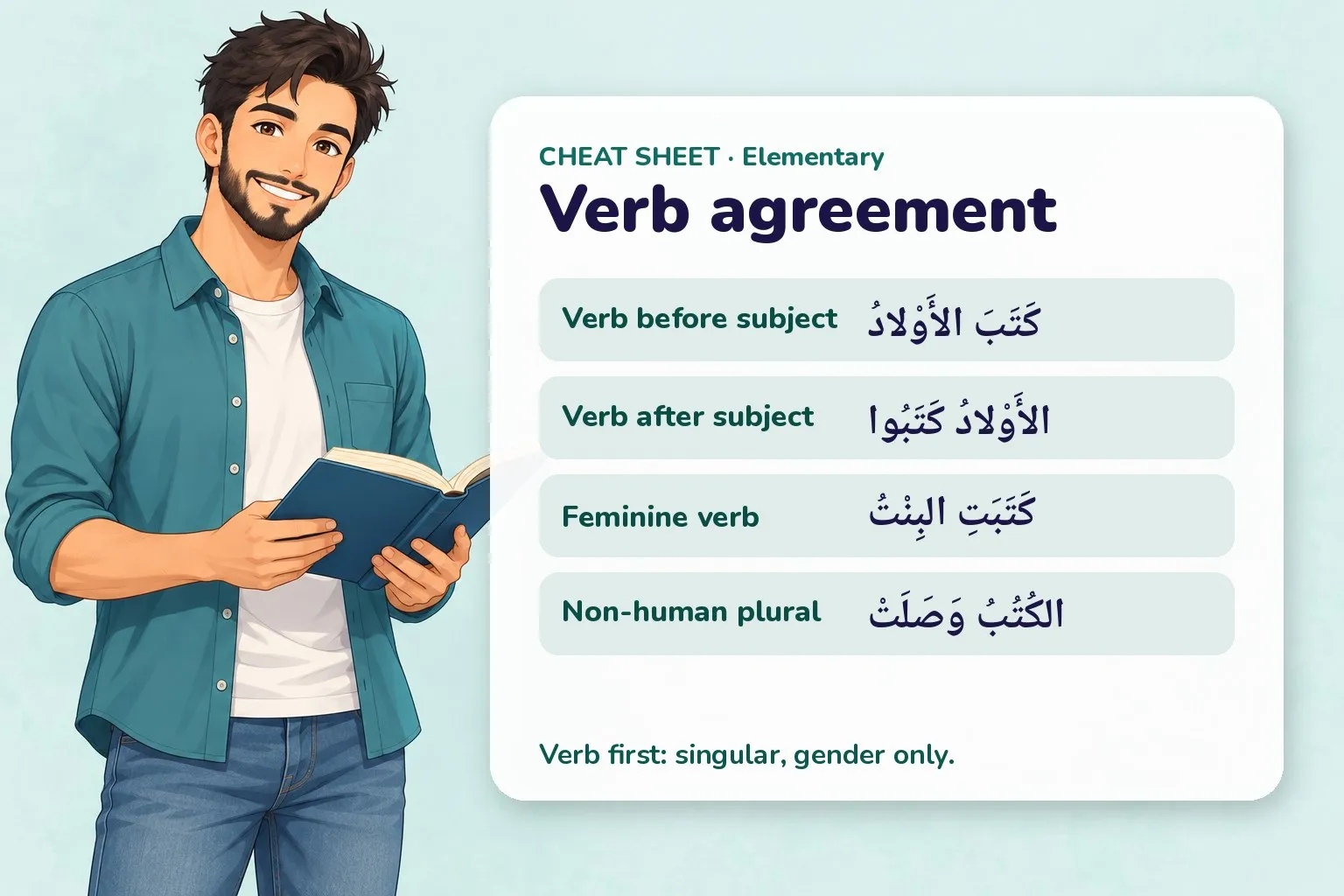
Quick recap before you practise.
Practice
Verb agreement practice
Try each one, then press Check. No sign-up, nothing is sent anywhere — it all runs in your browser.
Hint: objects take a feminine singular verb
Show answer
waṣalat — الكُتُبُ وَصَلَتْ (al-kutubu waṣalat): a non-human plural is feminine singular.
4 Order the words: 'The two boys wrote.' (subject first)
Show answer
الوَلَدَانِ (al-waladāni) كَتَبَا (katabā) — Subject first, dual agreement: الوَلَدَانِ كَتَبَا (al-waladāni katabā).
5 Match each subject to the correct verb form (subject-first order).
- الأَوْلادُ (al-awlādu)
- البَنَاتُ (al-banātu)
- الوَلَدَانِ (al-waladāni)
- الكُتُبُ (al-kutubu)
Show answer
- الأَوْلادُ (al-awlādu) → كَتَبُوا (katabū) — masc. pl.
- البَنَاتُ (al-banātu) → كَتَبْنَ (katabna) — fem. pl.
- الوَلَدَانِ (al-waladāni) → كَتَبَا (katabā) — dual
- الكُتُبُ (al-kutubu) → وَصَلَتْ (waṣalat) — fem. sg.
People take plural/dual agreement; objects take feminine singular.
Quiz
Verb agreement quiz
12 questions · pick an answer and you'll see straight away if it's right.
-
Show answer
singular — Verb first stays singular: كَتَبَ الأَوْلادُ (kataba l-awlādu).
-
Show answer
gender and number (full) — Subject first means full agreement: الأَوْلادُ كَتَبُوا (al-awlādu katabū).
-
Show answer
كَتَبَتِ البِنْتُ (katabat il-bintu) — Gender still agrees: the feminine verb adds -at, كَتَبَتِ البِنْتُ (katabat il-bintu).
-
Show answer
a verb before its subject must stay singular — In the verb-first order the verb does not take a plural ending.
-
Show answer
الكُتُبُ وَصَلَتْ (al-kutubu waṣalat) — A non-human plural takes a feminine singular verb: وَصَلَتْ (waṣalat).
-
Show answer
feminine singular — Objects and animals in the plural take feminine singular agreement.
-
Show answer
الوَلَدَانِ كَتَبَا (al-waladāni katabā) — Two people take the dual ending -ā: كَتَبَا (katabā).
-
Show answer
ـنَ (na) — البَنَاتُ كَتَبْنَ (al-banātu katabna): feminine plural is -na.
-
Show answer
a plural verb — Only rational (human) plurals take a plural verb; objects stay feminine singular.
-
Show answer
ذَهَبَ الطُّلّابُ (dhahaba ṭ-ṭullābu) — Verb first, singular: ذَهَبَ الطُّلّابُ (dhahaba ṭ-ṭullābu).
-
Show answer
jalasū — الرِّجَالُ جَلَسُوا (ar-rijālu jalasū): subject first takes the plural -ū.
-
Show answer
built into the verb ending — كَتَبُوا (katabū) already means 'they wrote'; the pronoun is inside the verb.
Recap cheat-sheet
| Situation | Agreement | Example |
|---|---|---|
| Verb before subject | gender only, singular | كَتَبَ الأَوْلادُ (kataba l-awlādu) |
| Subject before verb | gender and number | الأَوْلادُ كَتَبُوا (al-awlādu katabū) |
| Feminine subject | add -at | كَتَبَتْ (katabat) |
| Two people (dual) | add -ā | كَتَبَا (katabā) |
| Non-human plural | feminine singular | الكُتُبُ وَصَلَتْ (al-kutubu waṣalat) |
Next
- See the word order in the Arabic verbal sentence
- Then the subject-first Arabic nominal sentence
- New here? Start with Start Learning Arabic Here
All Arabic grammar topics
Every grammar point in order, from your first sentence to advanced structures. Pick one and go straight to it. New lessons go live every day, so topics marked Coming soon fill in over the next weeks.
Grammar path
Beginner 16 topics · 16 ready
- 01 The Definite Article الـ (al-)
- 02 Indefiniteness and Tanwin
- 03 Noun Gender (Masculine & Feminine)
- 04 The Nominal Sentence (Jumla Ismiyya)
- 05 Adjective Agreement (Na't)
- 06 Personal Pronouns (Separate)
- 07 Attached (Possessive/Object) Pronouns
- 08 Demonstratives (هذا hādhā، هذه hādhihi، ذلك dhālika)
- 09 The Idafa (Possessive Construction)
- 10 Prepositions (Huruf al-Jarr)
- 11 Questions (هل hal، أ a، ما mā، من man، أين ayna)
- 12 Negating Nominal Sentences (ليس laysa)
- 13 Numbers 1-10 and Counting
- 14 Pointing Sentences (هذا كتاب hādhā kitāb)
- 15 Prepositional & Adverbial Predicates
- 16 Expressing 'Have' (عند / لـ / مع ʿinda / li- / maʿa)
Elementary 17 topics · 5 ready
- 17 The Present Tense (al-Mudari')
- 18 The Past Tense (al-Madi)
- 19 The Verbal Sentence (Jumla Fi'liyya)
- 20 Verb Agreement with the Subject You are here
- 21 Negating the Past (ما / لم mā / lam)
- 22 Negating the Present & Future (لا / لن lā / lan) Coming soon
- 23 The Future (سـ / سوف sa- / sawfa) Coming soon
- 24 The Dual (al-Muthanna) Coming soon
- 25 Sound Plurals (Masculine & Feminine) Coming soon
- 26 Broken Plurals (Jam' Taksir) Coming soon
- 27 Kana and Its Sisters Coming soon
- 28 Inna and Its Sisters Coming soon
- 29 Non-Human Plural Agreement Coming soon
- 30 Days, Months and Time Expressions Coming soon
- 31 Adverbs of Time & Place (Zarf) Coming soon
- 32 Hamzat al-Wasl vs Hamzat al-Qat' Coming soon
- 33 Colours & Defects (Af'al pattern) Coming soon
Intermediate 22 topics
- 34 The Three Cases (I'rab) Coming soon
- 35 Uses of the Accusative (Mansubat) Coming soon
- 36 The Derived Verb Forms (I-X) Coming soon
- 37 Root and Pattern Morphology Coming soon
- 38 Active & Passive Participles Coming soon
- 39 The Verbal Noun (Masdar) Coming soon
- 40 The Subjunctive (Mansub) after أن / لـ (an / li-) Coming soon
- 41 The Jussive (Majzum) & Commands Coming soon
- 42 The Imperative (al-Amr) Coming soon
- 43 Weak Verbs (Assimilated, Hollow, Defective) Coming soon
- 44 Relative Clauses (الذي alladhī، التي allatī) Coming soon
- 45 Comparative & Superlative (Af'al) Coming soon
- 46 Conditional Sentences (إذا idhā، إنْ in، لو law) Coming soon
- 47 Numbers 11-99 and Agreement Coming soon
- 48 The Five Nouns (al-Asma' al-Khamsa) Coming soon
- 49 Diptotes (al-Mamnu' min as-Sarf) Coming soon
- 50 Object of Purpose & Accompaniment Coming soon
- 51 Apposition & Substitution (Badal) Coming soon
- 52 Emphasis (at-Tawkid: نفس nafs، كل kull) Coming soon
- 53 Coordination (al-'Atf) & Case Carrying Coming soon
- 54 Questions of Quantity (كم kam) & Number Syntax Coming soon
- 55 The Nisba Adjective (-iyy) Coming soon
Upper-Intermediate 14 topics
- 56 The Circumstantial Clause (Hal) Coming soon
- 57 Specification (Tamyiz) Coming soon
- 58 Exception (al-Istithna': إلا illā) Coming soon
- 59 The Absolute Object (al-Maf'ul al-Mutlaq) Coming soon
- 60 The Passive Voice (al-Majhul) Coming soon
- 61 The Vocative (an-Nida': يا yā) Coming soon
- 62 Energetic Mood & Emphasis (Nun al-Tawkid) Coming soon
- 63 Verbs with Prepositions Coming soon
- 64 Connectors & Cohesion (و wa، ف fa، ثم thumma، لكنّ lākinna) Coming soon
- 65 Verbs of Certainty/Doubt (Dhanna & Sisters) Coming soon
- 66 Verbs with Two Objects Coming soon
- 67 The Diminutive (at-Tasghir) Coming soon
- 68 Collective & Unit Nouns Coming soon
- 69 Conditional Particles & Jussive Pair Coming soon
Advanced 10 topics
- 70 Advanced I'rab & Government Coming soon
- 71 Expressing Aspect (قد qad، كان قد kāna qad، لمّا lammā) Coming soon
- 72 Rhetorical Structures (Taqdim wa-Ta'khir) Coming soon
- 73 Advanced Conditionals & Oaths Coming soon
- 74 Classical/Formal Register (Fusha Style) Coming soon
- 75 Nominal Style & Masdar-Heavy Syntax Coming soon
- 76 Advanced Exception & Restriction (إنما innamā، غير ghayr) Coming soon
- 77 Absolute Negation (لا النافية للجنس lā an-nāfiya lil-jins) Coming soon
- 78 Particle Review: إنّ (inna)، أنّ (anna)، أنْ (an)، كأنّ (ka-anna) Coming soon
- 79 Verb-Initial vs Noun-Initial Style Coming soon