How Arabic Says 'Have': ʿinda, li-, maʿa
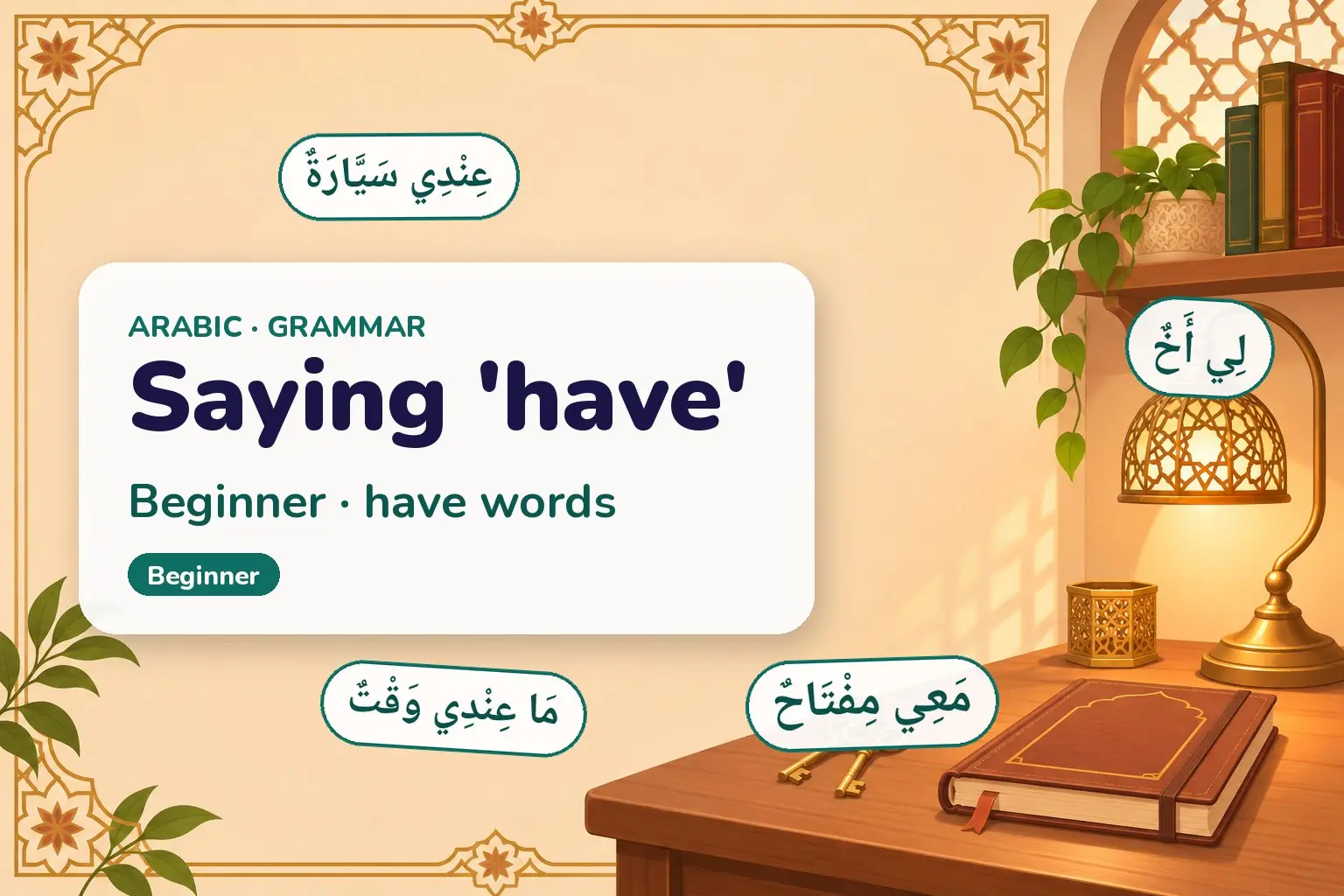
Arabic has no verb 'to have'. You say it with عِنْدَ (ʿinda, 'at'), لِـ (li-, 'to/for') or مَعَ (maʿa, 'with') plus an attached pronoun: عِنْدِي سَيَّارَةٌ (ʿindī sayyāratun) means 'I have a car'.
Level: beginner. Arabic has no verb that means to have. Instead it says that something is at you, to you, or with you, using a small word plus an attached pronoun. To say “I have a car” you say عِنْدِي سَيَّارَةٌ ʿindī sayyāratun — literally “at-me (is) a car.” Once you learn the three little words and their pronoun endings, you can say “have” for anything.
The rule
A pronoun suffix is a short ending stuck onto a word to mean my, your, his and so on — like -ī for “me” in عِنْدِي (ʿindī). Arabic builds “have” by attaching these suffixes to one of three words:
- عِنْدَ (ʿinda) — “at / in the possession of.” The all-purpose “have”: things you own or keep. عِنْدِي سَيَّارَةٌ (ʿindī sayyāratun), “I have a car.”
- لِـ (li-) — “to / for.” Used for belonging and relationships, including things that are inalienably yours: لَهُ أَخٌ (lahu akhun), “he has a brother.”
- مَعَ (maʿa) — “with.” Used for what you have on you right now: مَعِي الْمِفْتَاحُ (maʿī al-miftāḥu), “I have the key (on me).”
The thing possessed is the grammatical subject of the sentence, so it stays in the nominative case (the -u or -un ending) and is usually indefinite: عِنْدَهُ كِتَابٌ (ʿindahu kitābun), “he has a book.” The word for the possessor is carried entirely by the suffix.
There is no present-tense verb anywhere in these sentences. The “is / are / have” of English lives in placing the phrase first and the possessed noun after it.
The forms
Each word takes the same family of pronoun suffixes. Note that لِـ (li-) changes its vowel to la- before every suffix except “me” — لِي (lī).
| Meaning | عِنْدَ (ʿinda) | لِـ (li-) | مَعَ (maʿa) |
|---|---|---|---|
| I have | عِنْدِي (ʿindī) | لِي (lī) | مَعِي (maʿī) |
| you have (m) | عِنْدَكَ (ʿindaka) | لَكَ (laka) | مَعَكَ (maʿaka) |
| you have (f) | عِنْدَكِ (ʿindaki) | لَكِ (laki) | مَعَكِ (maʿaki) |
| he has | عِنْدَهُ (ʿindahu) | لَهُ (lahu) | مَعَهُ (maʿahu) |
| she has | عِنْدَهَا (ʿindahā) | لَهَا (lahā) | مَعَهَا (maʿahā) |
| we have | عِنْدَنَا (ʿindanā) | لَنَا (lanā) | مَعَنَا (maʿanā) |
| you have (pl) | عِنْدَكُمْ (ʿindakum) | لَكُمْ (lakum) | مَعَكُمْ (maʿakum) |
| they have | عِنْدَهُمْ (ʿindahum) | لَهُمْ (lahum) | مَعَهُمْ (maʿahum) |
Example sentences
- عِنْدِي سَيَّارَةٌ.ʿindī sayyāratun.I have a car.ʿinda + me; car stays indefinite nominative
- عِنْدَكَ كِتَابٌ؟ʿindaka kitābun?Do you (m) have a book?
- عِنْدَهَا أَخٌ صَغِيرٌ.ʿindahā akhun ṣaghīrun.She has a little brother.
- عِنْدَنَا بَيْتٌ كَبِيرٌ.ʿindanā baytun kabīrun.We have a big house.
- عِنْدَهُمْ أَطْفَالٌ.ʿindahum aṭfālun.They have children.
- لَهُ أَخٌ فِي مِصْرَ.lahu akhun fī Miṣra.He has a brother in Egypt.li- for a relationship
- لَهَا عَيْنَانِ جَمِيلَتَانِ.lahā ʿaynāni jamīlatāni.She has beautiful eyes.li- for inalienable parts
- لَنَا حَقٌّ.lanā ḥaqqun.We have a right.
- مَعِي الْمِفْتَاحُ.maʿī al-miftāḥu.I have the key (on me).maʿa for what you carry now
- هَلْ مَعَكَ مَالٌ؟hal maʿaka mālun?Do you (m) have money on you?
- مَعَهَا هَاتِفٌ.maʿahā hātifun.She has a phone with her.
- عِنْدِي وَقْتٌ الْيَوْمَ.ʿindī waqtun al-yawma.I have time today.
- عِنْدَكُمْ دَرْسٌ غَدًا.ʿindakum darsun ghadan.You (pl) have a lesson tomorrow.
- لَدَيَّ سُؤَالٌ.ladayya suʾālun.I have a question.formal ladā
- مَا عِنْدِي فِكْرَةٌ.mā ʿindī fikratun.I have no idea.negation with mā
- لَيْسَ عِنْدَهُ وَقْتٌ.laysa ʿindahu waqtun.He has no time.negation with laysa
- كَانَ عِنْدِي كَلْبٌ.kāna ʿindī kalbun.I used to have a dog.past needs kāna
Notice none of these has a verb for “have” in the present. The meaning comes from the little word plus its suffix.
Common mistakes
- ❌ أَنَا عِنْدِي سَيَّارَةٌ (anā ʿindī sayyāratun) is fine, but ❌ عِنْدَ سَيَّارَةٌ (ʿinda sayyāratun) → ✅ عِنْدِي سَيَّارَةٌ (ʿindī sayyāratun). عِنْدَ (ʿinda) needs a pronoun suffix (or a noun after it) to show who has it.
- ❌ عِنْدِي السَّيَّارَةَ (ʿindī as-sayyārata) → ✅ عِنْدِي سَيَّارَةٌ (ʿindī sayyāratun). The thing you have is the subject: keep it nominative (-un), usually indefinite, not accusative.
- ❌ أَنَا أَمْلِكُ وَقْتٌ (anā amliku waqtun) for “I have time” → ✅ عِنْدِي وَقْتٌ (ʿindī waqtun). The verb أَمْلِكُ (amliku) means “I own / possess” (property), not everyday “have.”
- ❌ عِنْدِي أَخٌ (ʿindī akhun) for a brother is understandable but ✅ لِي أَخٌ (lī akhun) is the natural choice. Use لِـ (li-) for relatives and inalienable things.
- ❌ لَا عِنْدِي وَقْتٌ (lā ʿindī waqtun) → ✅ مَا عِنْدِي وَقْتٌ (mā ʿindī waqtun) or لَيْسَ عِنْدِي وَقْتٌ (laysa ʿindī waqtun). Negate these with مَا (mā) or لَيْسَ (laysa), not لَا (lā).
A short conversation
— سَامِي (Sāmī): هَلْ عِنْدَكَ قَلَمٌ؟ — hal ʿindaka qalamun? — Do you have a pen? — كَرِيم (Karīm): لَا، مَا عِنْدِي قَلَمٌ، لَكِنْ مَعِي هَاتِفٌ. — lā, mā ʿindī qalamun, lākin maʿī hātifun. — No, I have no pen, but I have my phone on me. — سَامِي (Sāmī): وَعِنْدَكَ وَقْتٌ الْآنَ؟ — wa-ʿindaka waqtun al-āna? — And do you have time now? — كَرِيم (Karīm): نَعَمْ، عِنْدِي سَاعَةٌ. — naʿam, ʿindī sāʿatun. — Yes, I have an hour.
Usage notes
- The possessor can be a full noun too. Instead of a suffix you can put a noun after the word: عِنْدَ الْمُعَلِّمِ كِتَابٌ (ʿinda l-muʿallimi kitābun), “the teacher has a book.” The noun after عِنْدَ (ʿinda) is genitive (-i).
- عِنْدَ (ʿinda) also means “at someone’s place.” عِنْدَ صَدِيقِي (ʿinda ṣadīqī) can mean “at my friend’s.” Context tells you whether it is location or possession.
- The past uses كَانَ (kāna). The no-verb rule is present only. For the past add كَانَ (kāna, “was”): كَانَ عِنْدِي كَلْبٌ (kāna ʿindī kalbun), “I used to have a dog.”
- Negation, two ways. مَا عِنْدِي (mā ʿindī) is the common spoken-flavoured negative; لَيْسَ عِنْدِي (laysa ʿindī) is the standard written one. Both mean “I don’t have.”
Compared with plain prepositions
The words عِنْدَ (ʿinda), لِـ (li-) and مَعَ (maʿa) are the same Arabic prepositions you use for place and direction; here they simply carry a pronoun suffix and mean “have.” When the same phrase describes where something is rather than who owns it, it is a prepositional predicate: الْكِتَابُ عَلَى الطَّاوِلَةِ (al-kitābu ʿalā aṭ-ṭāwilati), “the book is on the table.” Same building blocks, different job.
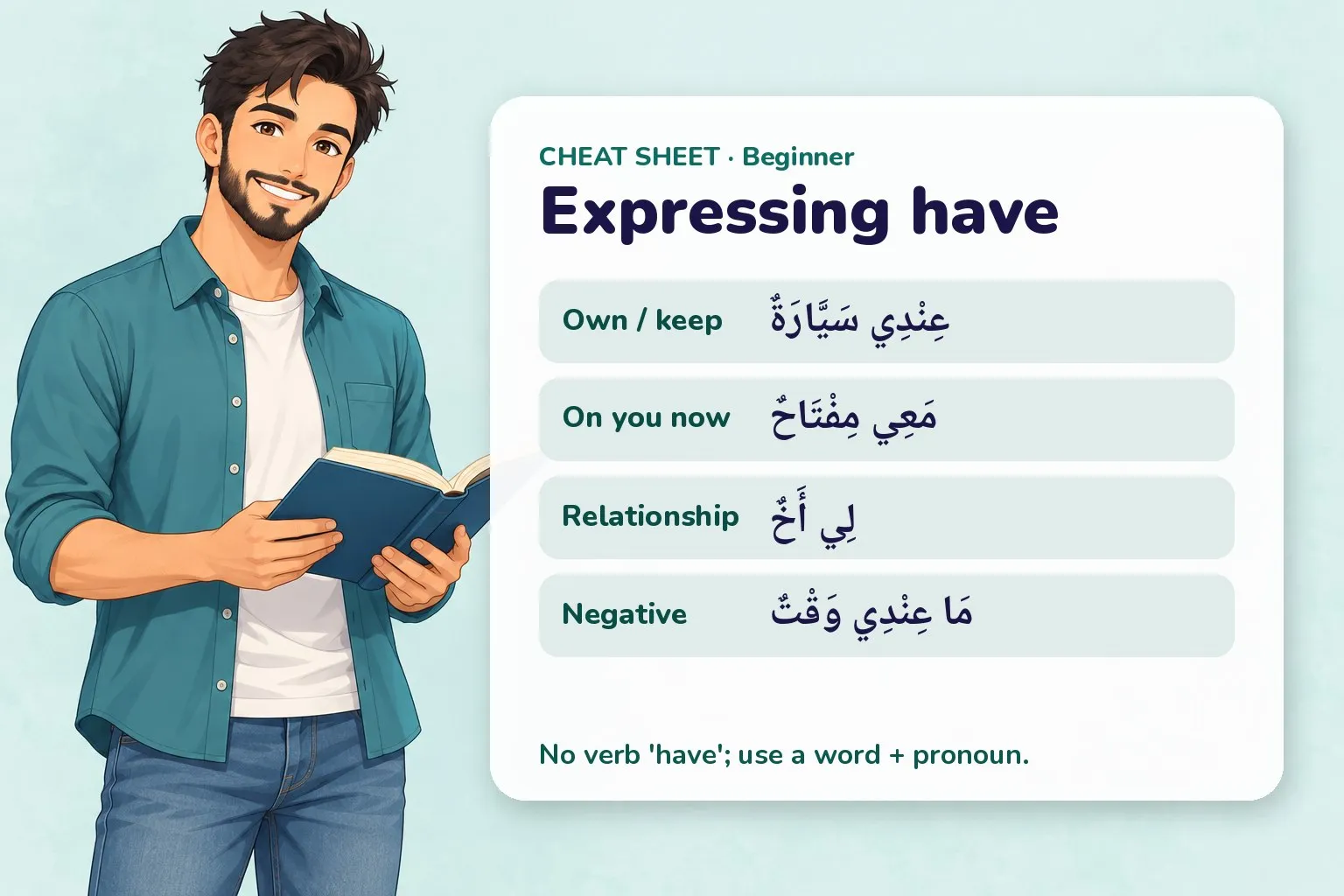
Quick recap before you practise.
Practice
Expressing have in Arabic — practice
Try each one, then press Check. No sign-up, nothing is sent anywhere — it all runs in your browser.
3 Match each word to its kind of 'having'.
- عِنْدَ (ʿinda)
- مَعَ (maʿa)
- لِـ (li-)
- لَدَى (ladā)
Show answer
- عِنْدَ (ʿinda) → own / keep
- مَعَ (maʿa) → have on you now
- لِـ (li-) → relationship / belonging
- لَدَى (ladā) → formal 'have'
ʿinda = own, maʿa = carrying now, li- = relationship, ladā = formal twin of ʿinda.
Hint: maʿa + her
Show answer
maʿahā — مَعَهَا هَاتِفٌ (maʿahā hātifun): maʿa for what she carries now.
5 Order the words: 'I have no time.'
Show answer
مَا (mā) عِنْدِي (ʿindī) وَقْتٌ (waqtun) — Negate with مَا: مَا عِنْدِي وَقْتٌ (mā ʿindī waqtun).
Quiz
Expressing have in Arabic — quiz
12 questions · pick an answer and you'll see straight away if it's right.
-
Show answer
subject (nominative) — It is the subject, so it stays nominative: عِنْدِي كِتَابٌ (ʿindī kitābun).
-
Show answer
مَعِي (maʿī) — مَعَ (maʿa) is for what you carry right now: مَعِي الْمِفْتَاحُ (maʿī al-miftāḥu).
-
Show answer
لَهُ أَخٌ (lahu akhun) — Relationships use لِـ (li-): لَهُ أَخٌ (lahu akhun).
-
Show answer
عِنْدَكِ (ʿindaki) — Feminine 'you' takes -ki: عِنْدَكِ (ʿindaki).
-
Show answer
la- — It shifts to la-: لَهُ (lahu), لَكَ (laka) — except لِي (lī), 'I have'.
-
Show answer
مَا عِنْدِي وَقْتٌ (mā ʿindī waqtun) — Use مَا (mā) or لَيْسَ (laysa): مَا عِنْدِي وَقْتٌ (mā ʿindī waqtun).
-
Show answer
a formal twin of عِنْدَ (ʿinda) — لَدَى (ladā) is the more formal equivalent of عِنْدَ (ʿinda).
-
Show answer
add كَانَ (kāna) — كَانَ عِنْدِي كَلْبٌ (kāna ʿindī kalbun): the past needs كَانَ (kāna).
-
Show answer
عِنْدَنَا بَيْتٌ كَبِيرٌ (ʿindanā baytun kabīrun) — 'We' takes -nā: عِنْدَنَا (ʿindanā).
-
Show answer
the possessed noun should be nominative and usually indefinite — The thing you have is the subject: سَيَّارَةٌ (sayyāratun), not accusative السَّيَّارَةَ.
-
Show answer
at my friend's place — عِنْدَ (ʿinda) also marks location: 'at my friend's'.
-
Show answer
genitive — عِنْدَ (ʿinda) acts like a preposition, so the following noun is genitive: عِنْدَ الْمُعَلِّمِ (ʿinda l-muʿallimi).
Recap cheat-sheet
| Idea | Arabic | Reading | Note |
|---|---|---|---|
| I have (own) | عِنْدِي كِتَابٌ | ʿindī kitābun | ʿinda + me |
| I have (on me) | مَعِي مِفْتَاحٌ | maʿī miftāḥun | maʿa + me |
| I have (relation) | لِي أَخٌ | lī akhun | li- + me |
| I don’t have | مَا عِنْدِي وَقْتٌ | mā ʿindī waqtun | negate with mā / laysa |
| I used to have | كَانَ عِنْدِي كَلْبٌ | kāna ʿindī kalbun | past adds kāna |
Next
- Build on your attached pronouns
- Back to the Arabic grammar section
- New here? Start with Start Learning Arabic Here
All Arabic grammar topics
Every grammar point in order, from your first sentence to advanced structures. Pick one and go straight to it. New lessons go live every day, so topics marked Coming soon fill in over the next weeks.
Grammar path
Beginner 16 topics · 16 ready
- 01 The Definite Article الـ (al-)
- 02 Indefiniteness and Tanwin
- 03 Noun Gender (Masculine & Feminine)
- 04 The Nominal Sentence (Jumla Ismiyya)
- 05 Adjective Agreement (Na't)
- 06 Personal Pronouns (Separate)
- 07 Attached (Possessive/Object) Pronouns
- 08 Demonstratives (هذا hādhā، هذه hādhihi، ذلك dhālika)
- 09 The Idafa (Possessive Construction)
- 10 Prepositions (Huruf al-Jarr)
- 11 Questions (هل hal، أ a، ما mā، من man، أين ayna)
- 12 Negating Nominal Sentences (ليس laysa)
- 13 Numbers 1-10 and Counting
- 14 Pointing Sentences (هذا كتاب hādhā kitāb)
- 15 Prepositional & Adverbial Predicates
- 16 Expressing 'Have' (عند / لـ / مع ʿinda / li- / maʿa) You are here
Elementary 17 topics · 5 ready
- 17 The Present Tense (al-Mudari')
- 18 The Past Tense (al-Madi)
- 19 The Verbal Sentence (Jumla Fi'liyya)
- 20 Verb Agreement with the Subject
- 21 Negating the Past (ما / لم mā / lam)
- 22 Negating the Present & Future (لا / لن lā / lan) Coming soon
- 23 The Future (سـ / سوف sa- / sawfa) Coming soon
- 24 The Dual (al-Muthanna) Coming soon
- 25 Sound Plurals (Masculine & Feminine) Coming soon
- 26 Broken Plurals (Jam' Taksir) Coming soon
- 27 Kana and Its Sisters Coming soon
- 28 Inna and Its Sisters Coming soon
- 29 Non-Human Plural Agreement Coming soon
- 30 Days, Months and Time Expressions Coming soon
- 31 Adverbs of Time & Place (Zarf) Coming soon
- 32 Hamzat al-Wasl vs Hamzat al-Qat' Coming soon
- 33 Colours & Defects (Af'al pattern) Coming soon
Intermediate 22 topics
- 34 The Three Cases (I'rab) Coming soon
- 35 Uses of the Accusative (Mansubat) Coming soon
- 36 The Derived Verb Forms (I-X) Coming soon
- 37 Root and Pattern Morphology Coming soon
- 38 Active & Passive Participles Coming soon
- 39 The Verbal Noun (Masdar) Coming soon
- 40 The Subjunctive (Mansub) after أن / لـ (an / li-) Coming soon
- 41 The Jussive (Majzum) & Commands Coming soon
- 42 The Imperative (al-Amr) Coming soon
- 43 Weak Verbs (Assimilated, Hollow, Defective) Coming soon
- 44 Relative Clauses (الذي alladhī، التي allatī) Coming soon
- 45 Comparative & Superlative (Af'al) Coming soon
- 46 Conditional Sentences (إذا idhā، إنْ in، لو law) Coming soon
- 47 Numbers 11-99 and Agreement Coming soon
- 48 The Five Nouns (al-Asma' al-Khamsa) Coming soon
- 49 Diptotes (al-Mamnu' min as-Sarf) Coming soon
- 50 Object of Purpose & Accompaniment Coming soon
- 51 Apposition & Substitution (Badal) Coming soon
- 52 Emphasis (at-Tawkid: نفس nafs، كل kull) Coming soon
- 53 Coordination (al-'Atf) & Case Carrying Coming soon
- 54 Questions of Quantity (كم kam) & Number Syntax Coming soon
- 55 The Nisba Adjective (-iyy) Coming soon
Upper-Intermediate 14 topics
- 56 The Circumstantial Clause (Hal) Coming soon
- 57 Specification (Tamyiz) Coming soon
- 58 Exception (al-Istithna': إلا illā) Coming soon
- 59 The Absolute Object (al-Maf'ul al-Mutlaq) Coming soon
- 60 The Passive Voice (al-Majhul) Coming soon
- 61 The Vocative (an-Nida': يا yā) Coming soon
- 62 Energetic Mood & Emphasis (Nun al-Tawkid) Coming soon
- 63 Verbs with Prepositions Coming soon
- 64 Connectors & Cohesion (و wa، ف fa، ثم thumma، لكنّ lākinna) Coming soon
- 65 Verbs of Certainty/Doubt (Dhanna & Sisters) Coming soon
- 66 Verbs with Two Objects Coming soon
- 67 The Diminutive (at-Tasghir) Coming soon
- 68 Collective & Unit Nouns Coming soon
- 69 Conditional Particles & Jussive Pair Coming soon
Advanced 10 topics
- 70 Advanced I'rab & Government Coming soon
- 71 Expressing Aspect (قد qad، كان قد kāna qad، لمّا lammā) Coming soon
- 72 Rhetorical Structures (Taqdim wa-Ta'khir) Coming soon
- 73 Advanced Conditionals & Oaths Coming soon
- 74 Classical/Formal Register (Fusha Style) Coming soon
- 75 Nominal Style & Masdar-Heavy Syntax Coming soon
- 76 Advanced Exception & Restriction (إنما innamā، غير ghayr) Coming soon
- 77 Absolute Negation (لا النافية للجنس lā an-nāfiya lil-jins) Coming soon
- 78 Particle Review: إنّ (inna)، أنّ (anna)، أنْ (an)، كأنّ (ka-anna) Coming soon
- 79 Verb-Initial vs Noun-Initial Style Coming soon