Arabic Question Words (hal, a, ma, man, ayna)
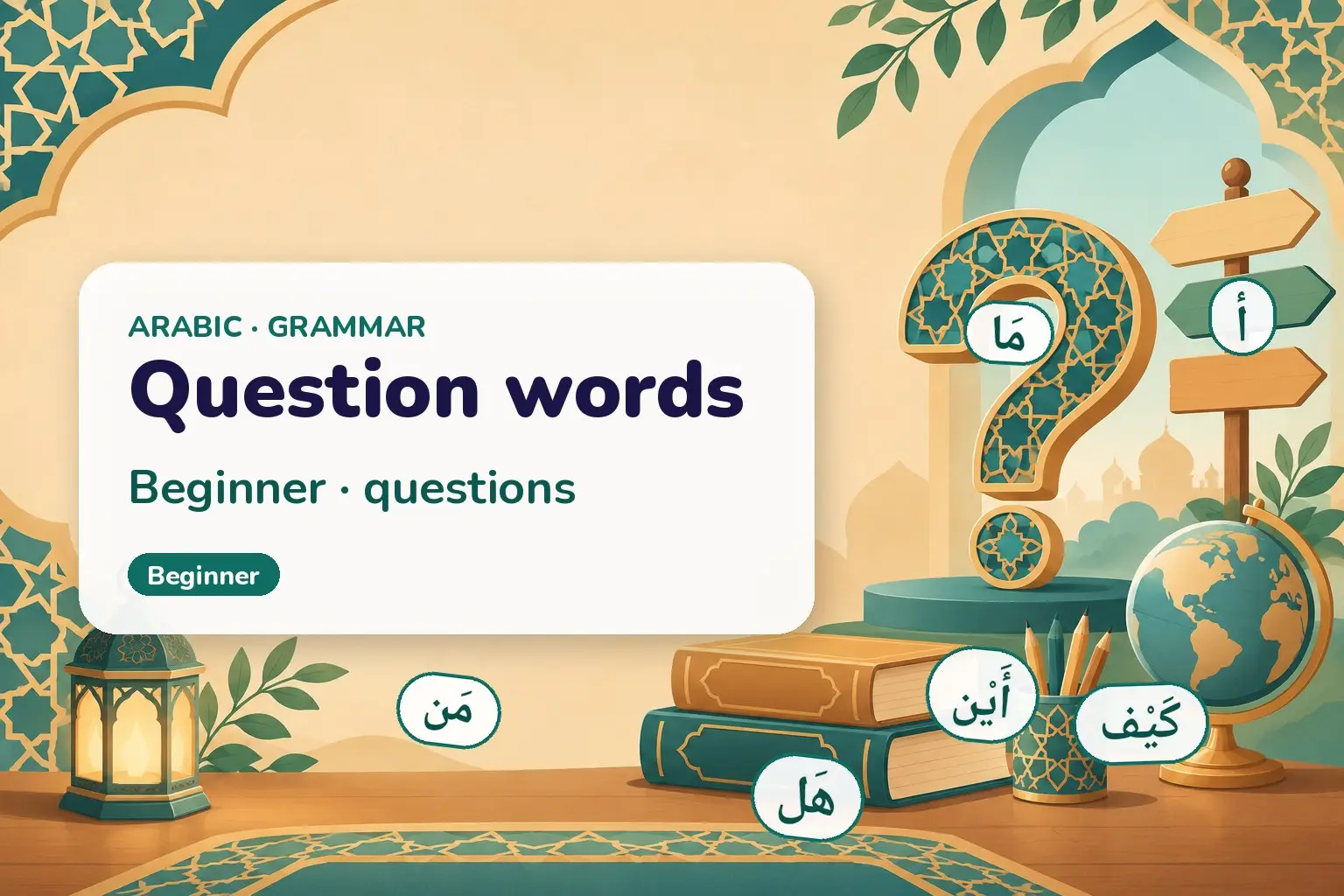
To ask a yes-no question in Arabic, put هل (hal) in front of a normal statement, unchanged: هل أنت طالب؟ (hal anta ṭālib?) = 'Are you a student?'. For other questions, open with a question word like مَا (mā, what), مَن (man, who) or أَيْن (ayna, where).
On this page10 sections · tap to jump
Level: Beginner. Asking questions in Arabic is simpler than in English in one way: for a yes-no question you do not rearrange the sentence or add a word like “do”. You keep the statement as it is and put a question marker in front. For other questions, you start with a question word.
The rule
There are two kinds of question. A yes-no question expects “yes” or “no”. A content question (a wh-question) asks for information — who, what, where, when, how.
Yes-no questions use one of two markers at the very start of the sentence:
- هل (hal) — the everyday yes-no particle. Take the statement أَنْتَ طَالِبٌ (anta ṭālibun, “you are a student”) and add هل (hal) in front: هَل أَنْتَ طَالِبٌ؟ (hal anta ṭālibun?) = “Are you a student?”. Nothing else moves.
- أ (a) — a single-letter prefix (the hamza) glued to the first word, a little more formal: أَأَنْتَ طَالِبٌ؟ (a-anta ṭālibun?), or with a verb أَتَتَكَلَّمُ العَرَبِيَّةَ؟ (a-tatakallamu al-ʿarabiyyata?) = “Do you speak Arabic?”.
Content questions begin with a question word, which stands at the front:
- مَا (mā) = what (before a noun) · مَاذَا (mādhā) = what (before a verb)
- مَن (man) = who · أَيْن (ayna) = where · مَتَى (matā) = when
- كَيْف (kayfa) = how · كَم (kam) = how many/much · لِمَاذَا (limādhā) = why
The question words
| Word | Transliteration | Meaning | Example |
|---|---|---|---|
| هَل | hal | (yes-no marker) | هَل أَنْتَ طَالِبٌ؟ (hal anta ṭālibun?) — Are you a student? |
| أ | a | (yes-no marker) | أَتَتَكَلَّمُ العَرَبِيَّةَ؟ (a-tatakallamu al-ʿarabiyyata?) — Do you speak Arabic? |
| مَا | mā | what (+ noun) | مَا اسْمُكَ؟ (mā ismuka?) — What is your name? |
| مَاذَا | mādhā | what (+ verb) | مَاذَا تَفْعَلُ؟ (mādhā tafʿalu?) — What are you doing? |
| مَن | man | who | مَن هَذَا؟ (man hādhā?) — Who is this? |
| أَيْن | ayna | where | أَيْنَ البَيْتُ؟ (ayna al-baytu?) — Where is the house? |
| مَتَى | matā | when | مَتَى الامْتِحَانُ؟ (matā al-imtiḥānu?) — When is the exam? |
| كَيْف | kayfa | how | كَيْفَ حَالُكَ؟ (kayfa ḥāluka?) — How are you? |
| كَم | kam | how many/much | كَمْ طَالِبًا؟ (kam ṭāliban?) — How many students? |
Example sentences
- هَل أَنْتَ طَالِبٌ؟hal anta ṭālibun?Are you a student?hal + unchanged statement
- هَل هَذَا كِتَابُكَ؟hal hādhā kitābuka?Is this your book?
- هَل تَتَكَلَّمُ العَرَبِيَّةَ؟hal tatakallamu al-ʿarabiyyata?Do you speak Arabic?
- أَتَتَكَلَّمُ الإِنْجِلِيزِيَّةَ؟a-tatakallamu al-inglīziyyata?Do you speak English?the prefix أ (a) forms a yes-no question
- مَا اسْمُكَ؟mā ismuka?What is your name?mā before a noun
- مَا هَذَا؟mā hādhā?What is this?
- مَاذَا تَفْعَلُ؟mādhā tafʿalu?What are you doing?mādhā before a verb
- مَاذَا تُرِيدُ؟mādhā turīdu?What do you want?
- مَن هَذَا؟man hādhā?Who is this?
- مَن مُعَلِّمُكَ؟man muʿallimuka?Who is your teacher?
- أَيْنَ البَيْتُ؟ayna al-baytu?Where is the house?
- أَيْنَ تَسْكُنُ؟ayna taskunu?Where do you live?
- مَتَى الامْتِحَانُ؟matā al-imtiḥānu?When is the exam?
- كَيْفَ حَالُكَ؟kayfa ḥāluka?How are you?
- كَمْ طَالِبًا فِي الصَّفِّ؟kam ṭāliban fī aṣ-ṣaffi?How many students are in the class?kam + singular noun with -an
- لِمَاذَا تَدْرُسُ العَرَبِيَّةَ؟limādhā tadrusu al-ʿarabiyyata?Why do you study Arabic?
Common mistakes
- ❌ مَاذَا اسْمُكَ؟ (mādhā ismuka?) → ✅ مَا اسْمُكَ؟ (mā ismuka?). Use مَا (mā) before a noun; مَاذَا (mādhā) is only before a verb.
- ❌ مَا تَفْعَلُ؟ (mā tafʿalu?) for “what are you doing?” → ✅ مَاذَا تَفْعَلُ؟ (mādhā tafʿalu?). A verb needs مَاذَا (mādhā).
- ❌ هَل تَكُونُ طَالِبًا؟ (hal takūnu ṭāliban?) → ✅ هَل أَنْتَ طَالِبٌ؟ (hal anta ṭālibun?). Do not add a “to be” verb; keep the plain nominal statement after هل (hal).
- ❌ مِن هَذَا؟ (min hādhā?) for “who is this?” → ✅ مَن هَذَا؟ (man hādhā?). مَن (man, “who”) and مِن (min, “from”) share the letters but differ in the vowel and the meaning.
- ❌ كَمْ طُلَّابٌ؟ (kam ṭullābun?) → ✅ كَمْ طَالِبًا؟ (kam ṭāliban?). After كَم (kam) the counted noun is singular and takes the -an ending.
A short conversation
— سَامِي (Sāmī): مَا اسْمُكِ؟ — mā ismuki? — What is your name? — لَيْلَى (Laylā): اسْمِي لَيْلَى. وَأَنْتَ؟ — ismī Laylā. wa-anta? — My name is Laylā. And you? — سَامِي (Sāmī): أَنَا سَامِي. مِن أَيْنَ أَنْتِ؟ — anā Sāmī. min ayna anti? — I’m Sāmī. Where are you from? — لَيْلَى (Laylā): أَنَا مِنَ الأُرْدُنِّ. — anā mina al-urdunni. — I’m from Jordan.
Usage notes
- هل (hal) keeps the statement whole. Whatever the sentence is — nominal هَذَا بَيْتٌ (hādhā baytun) or verbal تَدْرُسُ (tadrusu) — just put هل (hal) in front. Review statement order in the nominal sentence lesson.
- أ (a) attaches to the next word. It is one letter, written joined: أَذَهَبْتَ؟ (a-dhahabta?, “Did you go?”). It is a touch more formal than هل (hal).
- مِن أَيْن (min ayna) = “from where”. Question words can follow a preposition: مِن أَيْنَ أَنْتَ؟ (min ayna anta?) “Where are you from?”.
- كَم (kam) counts with a singular noun. The thing being counted is singular and takes -an: كَمْ كِتَابًا؟ (kam kitāban?) “How many books?”.
Compared with…
- Statement word order — a yes-no question is a statement plus هل (hal); nothing is reordered. Compare هَذَا طَالِبٌ (hādhā ṭālibun, “this is a student”) with هَل هَذَا طَالِبٌ؟ (hal hādhā ṭālibun?). See the nominal sentence.
- The demonstrative هَذَا (hādhā) appears in many questions — مَن هَذَا؟ (man hādhā?) and مَا هَذَا؟ (mā hādhā?); review it in demonstratives.
- The preposition مِن (min) looks like مَن (man) but means “from”; keep them apart with the prepositions lesson.
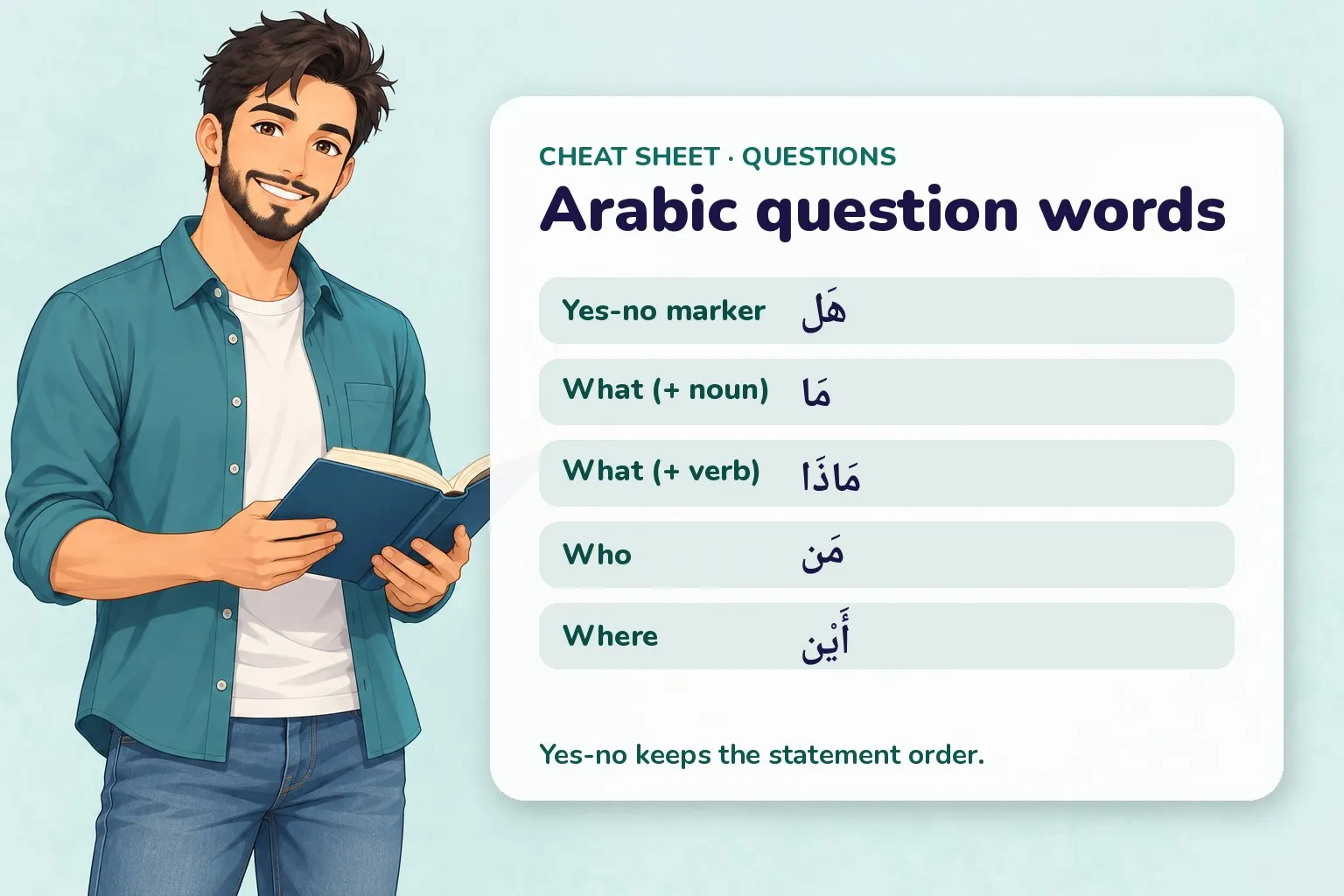
Quick recap before you practise.
Practice
Arabic question words practice
Try each one, then press Check. No sign-up, nothing is sent anywhere — it all runs in your browser.
Hint: it means 'where'
Show answer
ayna — أَيْنَ البَيْتُ؟ (ayna al-baytu?) — أَيْن (ayna) means 'where'.
4 Order the words: 'Who is this?'
Show answer
مَن (man) هَذَا (hādhā) — The question word comes first: مَن هَذَا؟ (man hādhā?).
5 Match each question word to its meaning.
- مَن (man)
- أَيْن (ayna)
- مَتَى (matā)
- كَيْف (kayfa)
Show answer
- مَن (man) → who
- أَيْن (ayna) → where
- مَتَى (matā) → when
- كَيْف (kayfa) → how
مَن (man) who, أَيْن (ayna) where, مَتَى (matā) when, كَيْف (kayfa) how.
Hint: before a noun
Show answer
mā — مَا اسْمُكَ؟ (mā ismuka?): مَا (mā) before a noun.
Quiz
Arabic question words quiz
12 questions · pick an answer and you'll see straight away if it's right.
-
Show answer
put هل (hal) or أ (a) at the front — Arabic adds هل (hal) or the prefix أ (a) and keeps the statement order.
-
Show answer
هَل أَنْتَ طَالِبٌ؟ (hal anta ṭālibun?) — Add هل (hal) to the statement: هَل أَنْتَ طَالِبٌ؟.
-
Show answer
أ (a) — أ (a) attaches to the first word: أَتَتَكَلَّمُ…؟ (a-tatakallamu…?).
-
Show answer
مَا (mā) — Before a noun, use مَا (mā): مَا اسْمُكَ؟ (mā ismuka?).
-
Show answer
مَاذَا (mādhā) — Before a verb, use مَاذَا (mādhā): مَاذَا تَفْعَلُ؟ (mādhā tafʿalu?).
-
Show answer
who — مَن (man) is 'who?'; the look-alike مِن (min) is 'from'.
-
Show answer
أَيْن (ayna) — أَيْن (ayna) = where: أَيْنَ البَيْتُ؟ (ayna al-baytu?).
-
Show answer
كَيْفَ حَالُكَ؟ (kayfa ḥāluka?) — كَيْف (kayfa) = how: كَيْفَ حَالُكَ؟.
-
Show answer
singular with -an — كَمْ طَالِبًا؟ (kam ṭāliban?): a singular noun ending in -an.
-
Show answer
مِن (min) means 'from'; use مَن (man) — مَن (man) is 'who'; مِن (min) with kasra is the preposition 'from'.
-
Show answer
a yes-no question with هل (hal) — A هل (hal) yes-no question just prefixes the statement; content questions front a question word.
-
Show answer
matā — مَتَى الامْتِحَانُ؟ (matā al-imtiḥānu?): مَتَى (matā) = when.
Recap cheat-sheet
| Point | Transliteration | Note |
|---|---|---|
| Yes-no marker | hal / a | front of the statement, no reorder |
| What (+ noun) | mā | مَا اسْمُكَ؟ |
| What (+ verb) | mādhā | مَاذَا تَفْعَلُ؟ |
| Who / where | man / ayna | مَن هَذَا؟ / أَيْنَ البَيْتُ؟ |
| who vs from | man vs min | question word vs preposition |
Next
- See how statements are built in the nominal sentence
- Learn the demonstratives used in questions: this and that
- Back to the Arabic grammar section
All Arabic grammar topics
Every grammar point in order, from your first sentence to advanced structures. Pick one and go straight to it. New lessons go live every day, so topics marked Coming soon fill in over the next weeks.
Grammar path
Beginner 16 topics · 12 ready
- 01 The Definite Article الـ (al-)
- 02 Indefiniteness and Tanwin
- 03 Noun Gender (Masculine & Feminine)
- 04 The Nominal Sentence (Jumla Ismiyya)
- 05 Adjective Agreement (Na't)
- 06 Personal Pronouns (Separate)
- 07 Attached (Possessive/Object) Pronouns
- 08 Demonstratives (هذا hādhā، هذه hādhihi، ذلك dhālika)
- 09 The Idafa (Possessive Construction)
- 10 Prepositions (Huruf al-Jarr)
- 11 Questions (هل hal، أ a، ما mā، من man، أين ayna) You are here
- 12 Negating Nominal Sentences (ليس laysa)
- 13 Numbers 1-10 and Counting Coming soon
- 14 Pointing Sentences (هذا كتاب hādhā kitāb) Coming soon
- 15 Prepositional & Adverbial Predicates Coming soon
- 16 Expressing 'Have' (عند / لـ / مع ʿinda / li- / maʿa) Coming soon
Elementary 17 topics
- 17 The Present Tense (al-Mudari') Coming soon
- 18 The Past Tense (al-Madi) Coming soon
- 19 The Verbal Sentence (Jumla Fi'liyya) Coming soon
- 20 Verb Agreement with the Subject Coming soon
- 21 Negating the Past (ما / لم mā / lam) Coming soon
- 22 Negating the Present & Future (لا / لن lā / lan) Coming soon
- 23 The Future (سـ / سوف sa- / sawfa) Coming soon
- 24 The Dual (al-Muthanna) Coming soon
- 25 Sound Plurals (Masculine & Feminine) Coming soon
- 26 Broken Plurals (Jam' Taksir) Coming soon
- 27 Kana and Its Sisters Coming soon
- 28 Inna and Its Sisters Coming soon
- 29 Non-Human Plural Agreement Coming soon
- 30 Days, Months and Time Expressions Coming soon
- 31 Adverbs of Time & Place (Zarf) Coming soon
- 32 Hamzat al-Wasl vs Hamzat al-Qat' Coming soon
- 33 Colours & Defects (Af'al pattern) Coming soon
Intermediate 22 topics
- 34 The Three Cases (I'rab) Coming soon
- 35 Uses of the Accusative (Mansubat) Coming soon
- 36 The Derived Verb Forms (I-X) Coming soon
- 37 Root and Pattern Morphology Coming soon
- 38 Active & Passive Participles Coming soon
- 39 The Verbal Noun (Masdar) Coming soon
- 40 The Subjunctive (Mansub) after أن / لـ (an / li-) Coming soon
- 41 The Jussive (Majzum) & Commands Coming soon
- 42 The Imperative (al-Amr) Coming soon
- 43 Weak Verbs (Assimilated, Hollow, Defective) Coming soon
- 44 Relative Clauses (الذي alladhī، التي allatī) Coming soon
- 45 Comparative & Superlative (Af'al) Coming soon
- 46 Conditional Sentences (إذا idhā، إنْ in، لو law) Coming soon
- 47 Numbers 11-99 and Agreement Coming soon
- 48 The Five Nouns (al-Asma' al-Khamsa) Coming soon
- 49 Diptotes (al-Mamnu' min as-Sarf) Coming soon
- 50 Object of Purpose & Accompaniment Coming soon
- 51 Apposition & Substitution (Badal) Coming soon
- 52 Emphasis (at-Tawkid: نفس nafs، كل kull) Coming soon
- 53 Coordination (al-'Atf) & Case Carrying Coming soon
- 54 Questions of Quantity (كم kam) & Number Syntax Coming soon
- 55 The Nisba Adjective (-iyy) Coming soon
Upper-Intermediate 14 topics
- 56 The Circumstantial Clause (Hal) Coming soon
- 57 Specification (Tamyiz) Coming soon
- 58 Exception (al-Istithna': إلا illā) Coming soon
- 59 The Absolute Object (al-Maf'ul al-Mutlaq) Coming soon
- 60 The Passive Voice (al-Majhul) Coming soon
- 61 The Vocative (an-Nida': يا yā) Coming soon
- 62 Energetic Mood & Emphasis (Nun al-Tawkid) Coming soon
- 63 Verbs with Prepositions Coming soon
- 64 Connectors & Cohesion (و wa، ف fa، ثم thumma، لكنّ lākinna) Coming soon
- 65 Verbs of Certainty/Doubt (Dhanna & Sisters) Coming soon
- 66 Verbs with Two Objects Coming soon
- 67 The Diminutive (at-Tasghir) Coming soon
- 68 Collective & Unit Nouns Coming soon
- 69 Conditional Particles & Jussive Pair Coming soon
Advanced 10 topics
- 70 Advanced I'rab & Government Coming soon
- 71 Expressing Aspect (قد qad، كان قد kāna qad، لمّا lammā) Coming soon
- 72 Rhetorical Structures (Taqdim wa-Ta'khir) Coming soon
- 73 Advanced Conditionals & Oaths Coming soon
- 74 Classical/Formal Register (Fusha Style) Coming soon
- 75 Nominal Style & Masdar-Heavy Syntax Coming soon
- 76 Advanced Exception & Restriction (إنما innamā، غير ghayr) Coming soon
- 77 Absolute Negation (لا النافية للجنس lā an-nāfiya lil-jins) Coming soon
- 78 Particle Review: إنّ (inna)، أنّ (anna)، أنْ (an)، كأنّ (ka-anna) Coming soon
- 79 Verb-Initial vs Noun-Initial Style Coming soon