Introduction to Chinese Characters
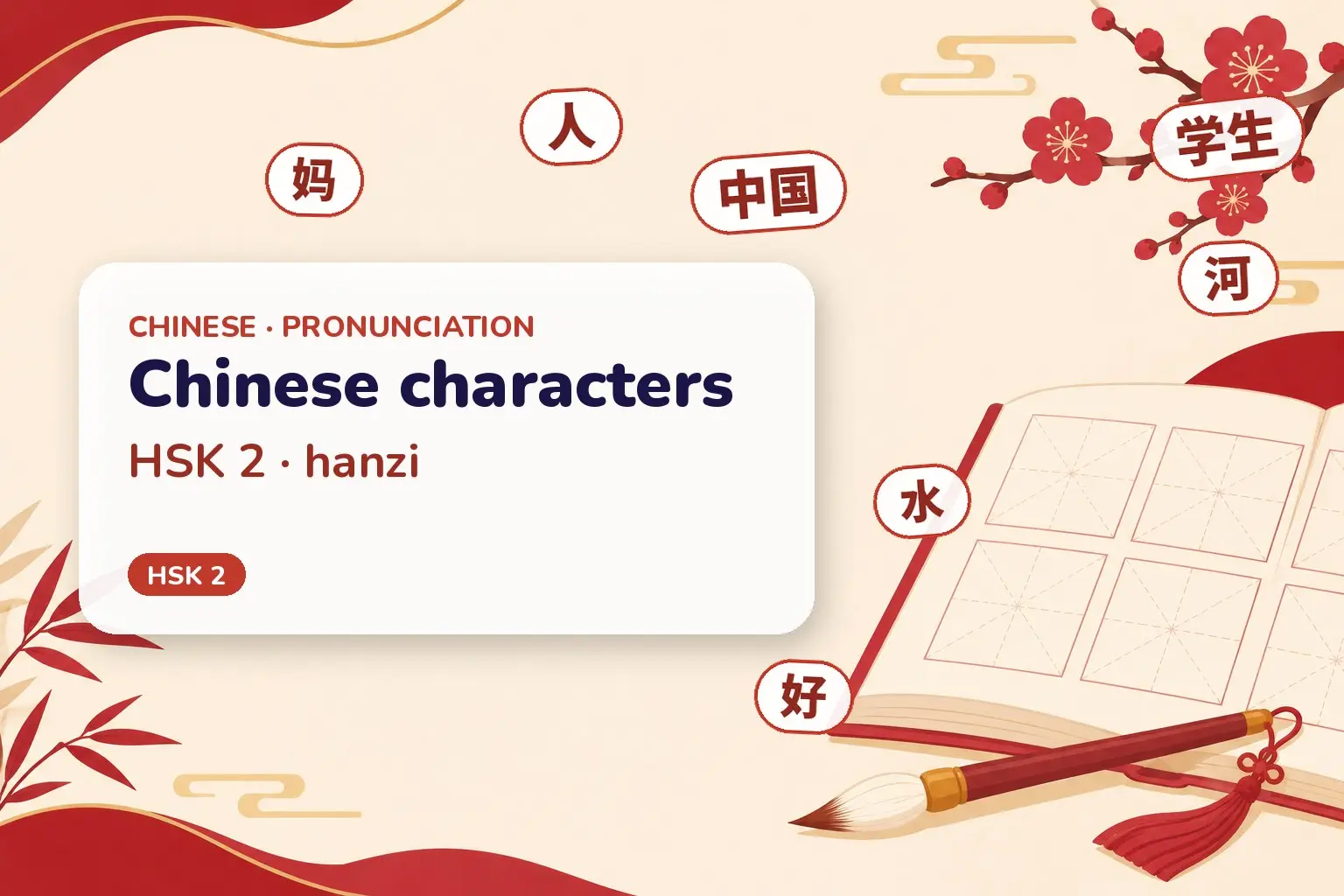
A Chinese character (汉字, hànzì) stands for one syllable and usually one unit of meaning, not a single sound like a letter. 好 (hǎo) means 'good'; you learn each character's shape, sound and meaning together, built from a small set of strokes and reused parts called radicals.
Level: HSK 2. Chinese is written with characters — 汉字 (hànzì) — not an alphabet. A character is not a letter standing for a single sound; it is a compact block that carries a syllable and usually a unit of meaning at once. 好 (hǎo) is one character, one syllable, and the meaning “good”. Learning to read is learning characters one by one, and this page shows you how they are built so the job feels orderly rather than endless.
What a character is
An English word is spelled out of letters that each stand for a sound. A Chinese character works differently: it is morphosyllabic, meaning each character maps to one syllable of speech and, in most cases, one piece of meaning (a “morpheme”). 人 (rén) is a syllable and means “person”; 山 (shān) is a syllable and means “mountain”.
Many words are a single character — 水 (shuǐ, water), 大 (dà, big) — but plenty are built from two or more characters joined together: 中国 (Zhōngguó, China) is 中 (zhōng, middle) + 国 (guó, country); 学生 (xuésheng, student) is 学 (xué, to study) + 生 (shēng, life/person). You read each character’s sound and meaning, then the combination.
Strokes and stroke order
Every character is drawn with a small set of strokes, 笔画 (bǐhuà) — a horizontal line, a vertical line, a dot, a sweep, a hook and so on. Strokes are written in a set order, generally:
- top to bottom,
- left to right,
- horizontal before crossing vertical,
- outside before inside, then close the box last.
Take 口 (kǒu, mouth): left vertical, then the top-and-right in one stroke, then the bottom — three strokes in that order. Stroke order is not fussiness: it keeps your characters even, lets others read your handwriting, and matches how dictionaries and typing systems count a character.
Radicals: the shared building blocks
Characters are built from recurring parts. The part a dictionary files a character under is its radical, 部首 (bùshǒu). Radicals often hint at a meaning area:
- 氵 (the “three drops” water radical) appears in 河 (hé, river), 海 (hǎi, sea), 湖 (hú, lake).
- 木 (mù, tree/wood) appears in 林 (lín, forest), 树 (shù, tree), 桌 (zhuō, table).
- 口 (kǒu, mouth) appears in 吃 (chī, to eat), 喝 (hē, to drink), 叫 (jiào, to call).
Spotting the radical gives you a first clue to meaning and a way to organise what you learn.
Sound-meaning compounds
Most characters — by far the largest group — are phono-semantic compounds, 形声字 (xíngshēngzì): one part suggests the meaning, the other suggests the sound. In 妈 (mā, mum), the left part 女 (nǚ, woman) gives the meaning area and the right part 马 (mǎ, horse) gives the sound “ma”. In 河 (hé, river), 氵 (the water radical) points to water and 可 (kě) hints at the sound.
The sound hint is only approximate — tones and vowels drift over centuries — but it turns a wall of characters into a system you can reason about.
| Character | Pinyin | Meaning part | Sound part |
|---|---|---|---|
| 妈 | mā (mum) | 女 (nǚ, woman) | 马 (mǎ, horse) |
| 河 | hé (river) | 氵 (water) | 可 (kě) |
| 请 | qǐng (please) | 讠 (speech) | 青 (qīng) |
| 们 | men (plural) | 亻 (person) | 门 (mén) |
Simplified vs traditional
There are two sets of character shapes in use:
- Simplified characters, 简体字 (jiǎntǐzì), have fewer strokes and are standard in mainland China, Singapore and Malaysia.
- Traditional characters, 繁体字 (fántǐzì), keep the older, fuller forms and are standard in Taiwan, Hong Kong and Macau.
Many characters are identical in both, but some differ: “country” is 国 (guó) simplified and 國 (guó) traditional; “to learn” is 学 (xué) simplified and 學 (xué) traditional. The HSK exam uses simplified characters, so most learners start there and add traditional forms later if they need them.
Characters in action
- 人rénperson — one character, one syllable, one meaning
- 口kǒumouth — three strokes; also a common radical
- 木mùtree / wood — four strokes; a meaning radical
- 林línforest — two 木 (mù) trees side by side
- 水shuǐwater — the full form behind the 氵 radical
- 河hériver — 氵 (water) for meaning, 可 (kě) for sound
- 妈māmum — 女 (nǚ) for meaning, 马 (mǎ) for sound
- 好hǎogood — 女 (nǚ, woman) beside 子 (zǐ, child)
- 中国ZhōngguóChina — 中 (zhōng, middle) + 国 (guó, country)
- 学生xuéshengstudent — 学 (xué, study) + 生 (shēng, life)
- 吃chīto eat — built on the 口 (kǒu, mouth) radical
- 请qǐngplease — 讠 (speech) for meaning, 青 (qīng) for sound
- 国guócountry — simplified form of traditional 國 (guó)
- 学xuéto study — simplified form of traditional 學 (xué)
A simple way to study them
- Learn sound, shape and meaning together. A flashcard for 河 (hé) should show the character, the pinyin hé, and “river” — never just one of the three.
- Group by radical. Meeting 河 (hé), 海 (hǎi) and 湖 (hú) together fixes the 氵 (water) radical and three words at once.
- Write to remember. Drawing a character in the correct stroke order a few times builds muscle memory that pure recognition does not.
- Reuse the parts. Once you know 马 (mǎ, horse), the character 妈 (mā, mum) is almost free — same sound, plus the 女 (nǚ) woman radical.
Practice
Chinese characters practice
Try each one, then press Check. No sign-up, nothing is sent anywhere — it all runs in your browser.
2 Match each character to its meaning.
- 人 (rén)
- 水 (shuǐ)
- 木 (mù)
- 口 (kǒu)
Show answer
- 人 (rén) → person
- 水 (shuǐ) → water
- 木 (mù) → tree / wood
- 口 (kǒu) → mouth
Each single character carries its own meaning and sound.
Hint: 部首 (bùshǒu)
Show answer
radical — The radical 部首 (bùshǒu) is the indexing part and often hints at meaning.
Where to go next
Characters tell you a syllable, and pinyin tells you how to say it, with the four tones on top. When you are ready to build sentences, start with the verb 是 (shì) and the Chinese grammar section. New here? Start at Start Learning Chinese Here.
Quiz
Chinese characters quiz
10 questions · pick an answer and you'll see straight away if it's right.
-
Show answer
a syllable plus usually one unit of meaning — Characters are morphosyllabic — one syllable and generally one meaning chunk.
-
Show answer
two characters — 中 (zhōng) + 国 (guó) — two characters joined into one word.
-
Show answer
top to bottom, left to right — The main rules are top to bottom and left to right, with boxes closed last.
-
Show answer
water — 氵 (shuǐ) is the water radical, so these characters relate to water.
-
Show answer
one meaning part and one sound part — One part hints at the meaning, the other at the sound — like 妈 (mā) = 女 (nǚ) + 马 (mǎ).
-
Show answer
国 (guó) — 国 (guó) is simplified; 國 (guó) is traditional.
-
Show answer
Taiwan, Hong Kong and Macau — Traditional characters are standard in Taiwan, Hong Kong and Macau.
-
Show answer
character, pinyin and meaning together — Learn shape, sound and meaning as one unit.
-
Show answer
马 (mǎ) gives the sound and 女 (nǚ) adds the meaning — 妈 reuses 马 for the sound and adds the 女 (woman) radical for meaning.
-
Show answer
HSK — The HSK uses simplified characters, so most beginners start with them.
All Chinese pronunciation & writing topics
Vocabulary, pronunciation, phrases, practice and exam help, ordered by level. Pick a topic and go straight to it. New lessons go live every day, so topics marked Coming soon fill in over the next weeks.
Pronunciation & writing
HSK 1 8 topics · 6 ready
- 01 Chinese Pronunciation Overview
- 02 Pinyin: The Romanisation System
- 03 Pinyin Initials (Consonants)
- 04 Pinyin Finals (Vowels & Endings)
- 05 The Four Tones (and Neutral Tone)
- 06 Character Strokes & Stroke Order
- 07 Essential HSK 1 Characters Coming soon
- 08 How to Type Chinese (Pinyin Input) Coming soon
HSK 2 7 topics · 2 ready
- 09 Tone Change Rules (Tone Sandhi)
- 10 Introduction to Chinese Characters (Hanzi) You are here
- 11 Character Radicals (Bushou) Coming soon
- 12 Measure Words (Classifiers) Intro Coming soon
- 13 Chinese Radicals Reference (214 Kangxi) Coming soon
- 14 Essential HSK 2 Characters Coming soon
- 15 Simplified vs Traditional Characters Coming soon
HSK 3 2 topics
- 16 Phonetic & Semantic Components Coming soon
- 17 Essential HSK 3 Characters Coming soon