Start Learning Chinese Here
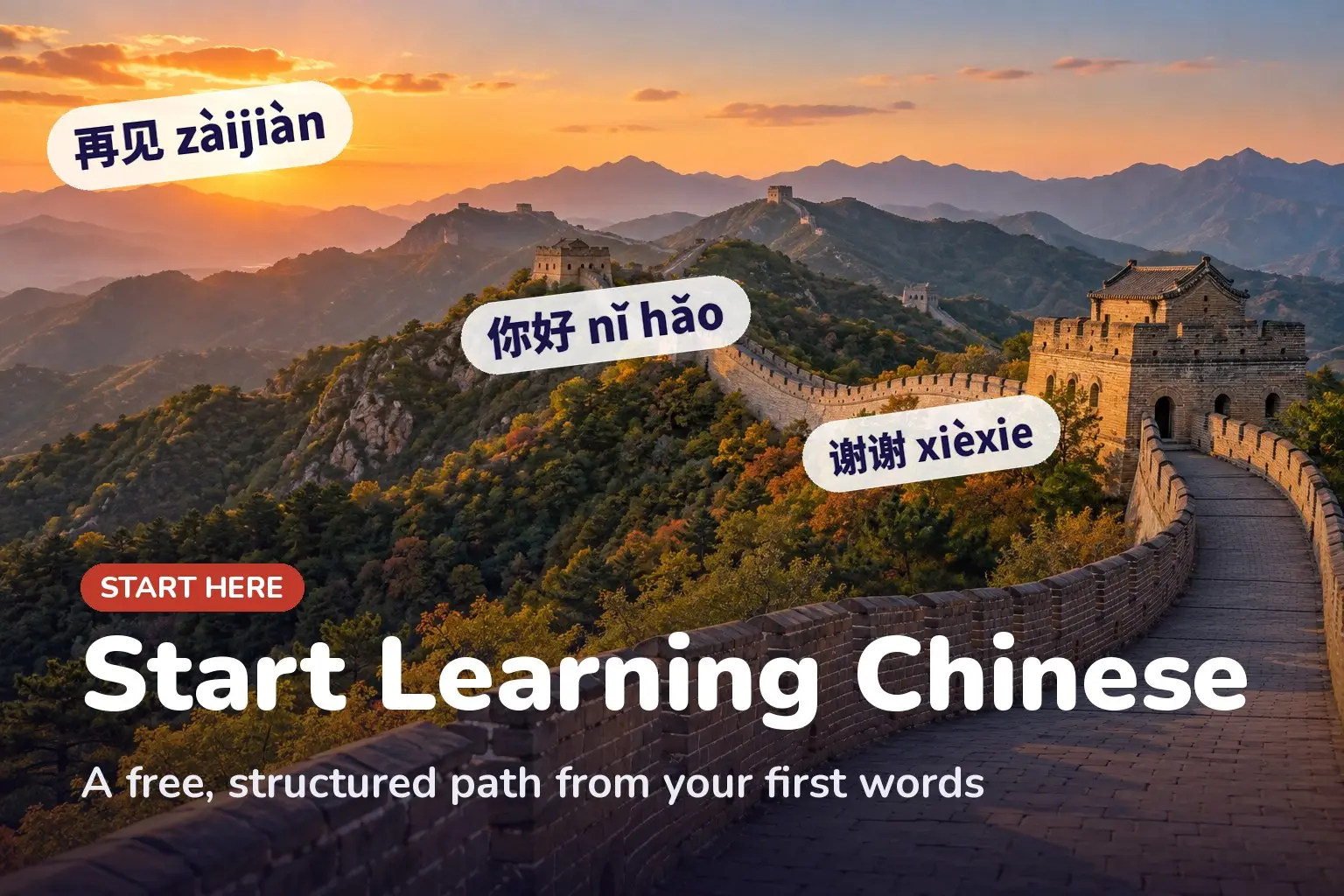
This is your starting point for Chinese. Learn in two tracks at once: a grammar backbone (one point at a time, starting with 是 (shì)) and general study (vocabulary, phrases and pronunciation). Keep a steady rhythm — about three grammar points and three study items a week — and open your first lesson below.
Level: HSK 1 (beginner). Welcome. This page explains how the Chinese course fits together and where to begin.
By the end of this page you can…
…understand the course structure and open your first lesson.
How the course works
You learn in two tracks at the same time:
- Grammar backbone — one clear point at a time, in order, with a short rule, a table, examples, common mistakes and a quiz. You start with 是 (shì), the copula used for identification (“I am a student”, 我是学生), and when not to use it.
- General study — vocabulary (common words first, from frequency lists filtered for beginners), phrases, pronunciation and short lessons that reuse what you have learned.
The tracks link to each other: a lesson points back to the grammar page it depends on rather than repeating it.
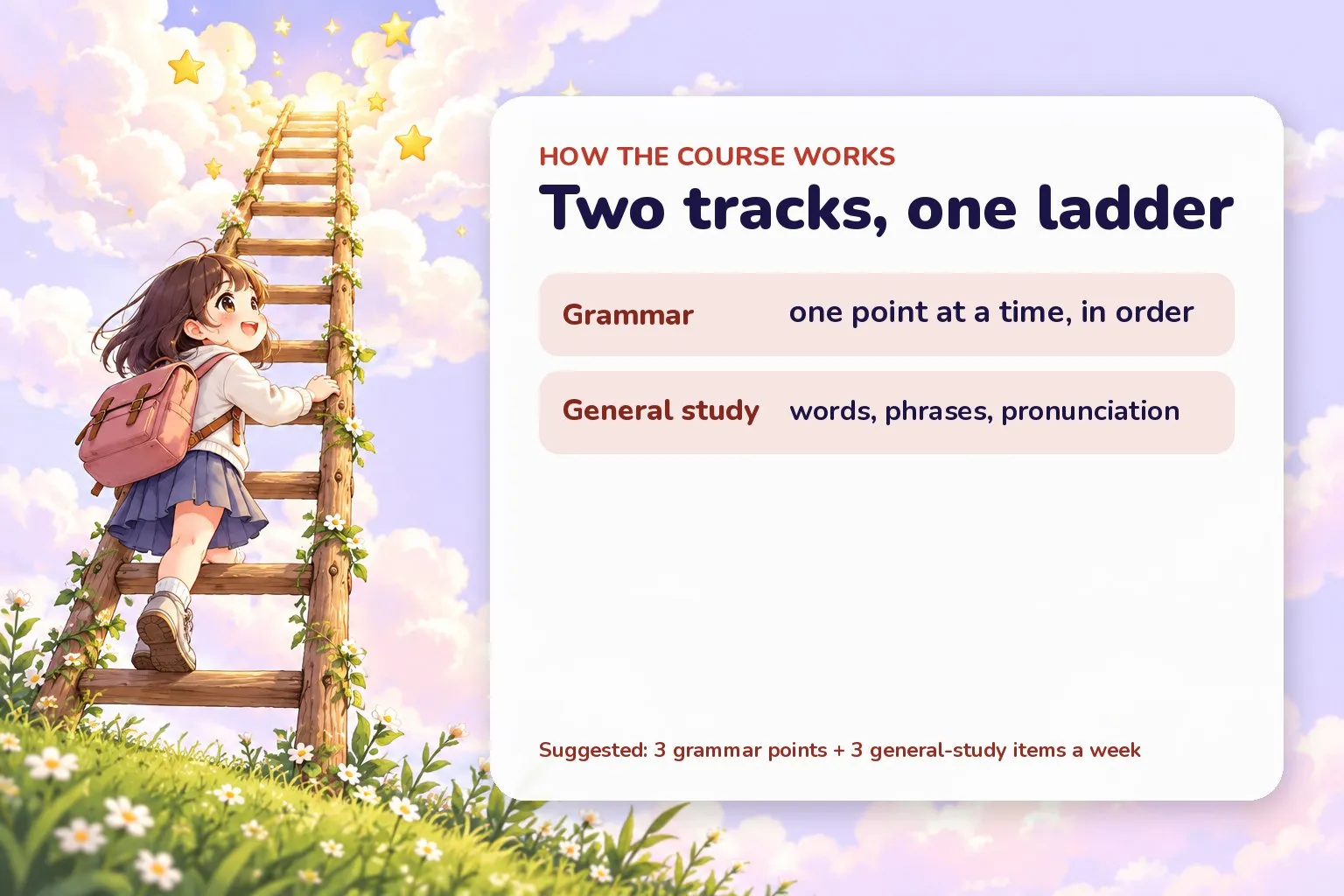
The path at a glance.
A rhythm that sticks
We suggest about three grammar points and three general-study items a week.
Chinese-specific tip
Mandarin has four tones plus a neutral tone, and the tone changes the meaning: mā (妈, mother) and mǎ (马, horse). Learn pinyin with tone marks first so you can read pronunciations, then add characters gradually. The good news: verbs don’t change for person or tense, and nouns usually don’t change for plural (the suffix 们 men is used mainly with pronouns and people: 我们, “we”).
Choose your path
- Complete beginner: follow the grammar in order.
- Some Chinese already: jump to the points you’re unsure of.
- Preparing for HSK: build the grammar backbone, and practise the exam’s own task types and timing alongside it; exam pages will be added here.
Start now
- Your first grammar lesson: 是 (shì): “To Be” in Mandarin Chinese
- Browse all topics in the Chinese grammar section
How this course is put together
Level labels are our own course sequencing, using the HSK levels as a broad guide to level (HSK is moving to the new HSK 3.0 standard; we label beginner pages HSK 1 under the current exam). Vocabulary sets start from public word-frequency lists (the FrequencyWords project, built from film and TV subtitles; word lists CC BY-SA 4.0) and will be filtered for beginners, removing names, noise and words common only on screen. Example sentences in the lessons are written for each lesson. If we can’t confirm a point, we leave it out rather than guess.
Sources
- 汉语拼音方案 (Scheme for the Chinese Phonetic Alphabet) — Ministry of Education of the PRC
- HSK level descriptions — Chinese Testing International (CTI)
- FrequencyWords (word lists) — hermitdave/FrequencyWords (word lists CC BY-SA 4.0)