German Reading Practice: Intermediate
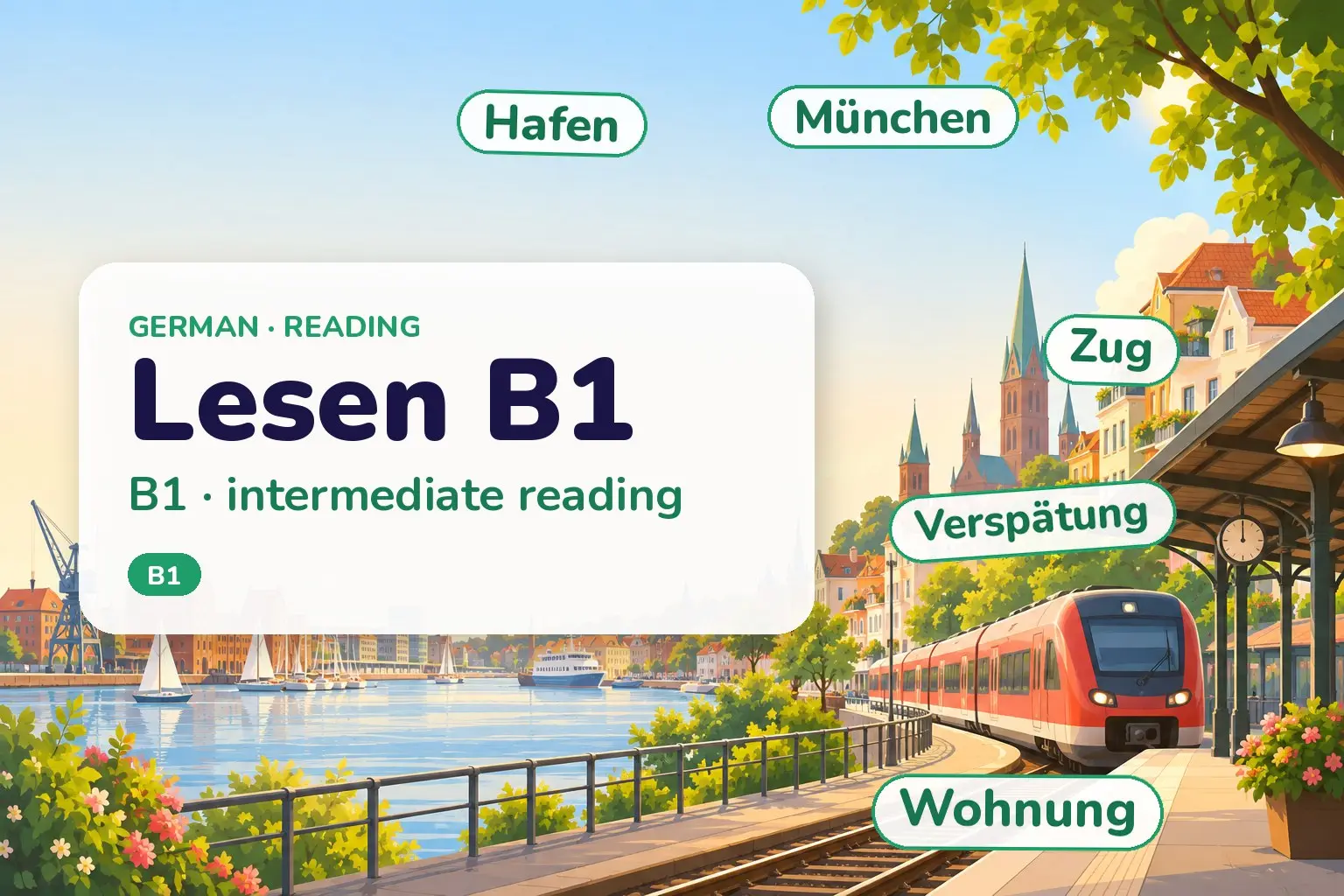
This page gives you two short, original German texts at intermediate (B1) level, each with the new words glossed and comprehension questions. Read first for the gist, then again slowly, checking the word list only when a sentence will not click.
Level: B1 (intermediate). At B1 the texts tell real stories with opinions, reasons and a little unreal past. Below are two original passages written for intermediate learners, with the harder words explained and questions to check what you understood.
By the end of this page you can…
…read two B1 German texts that use connectors and the unreal past, work out new words from context, and answer comprehension questions.
How to use this page
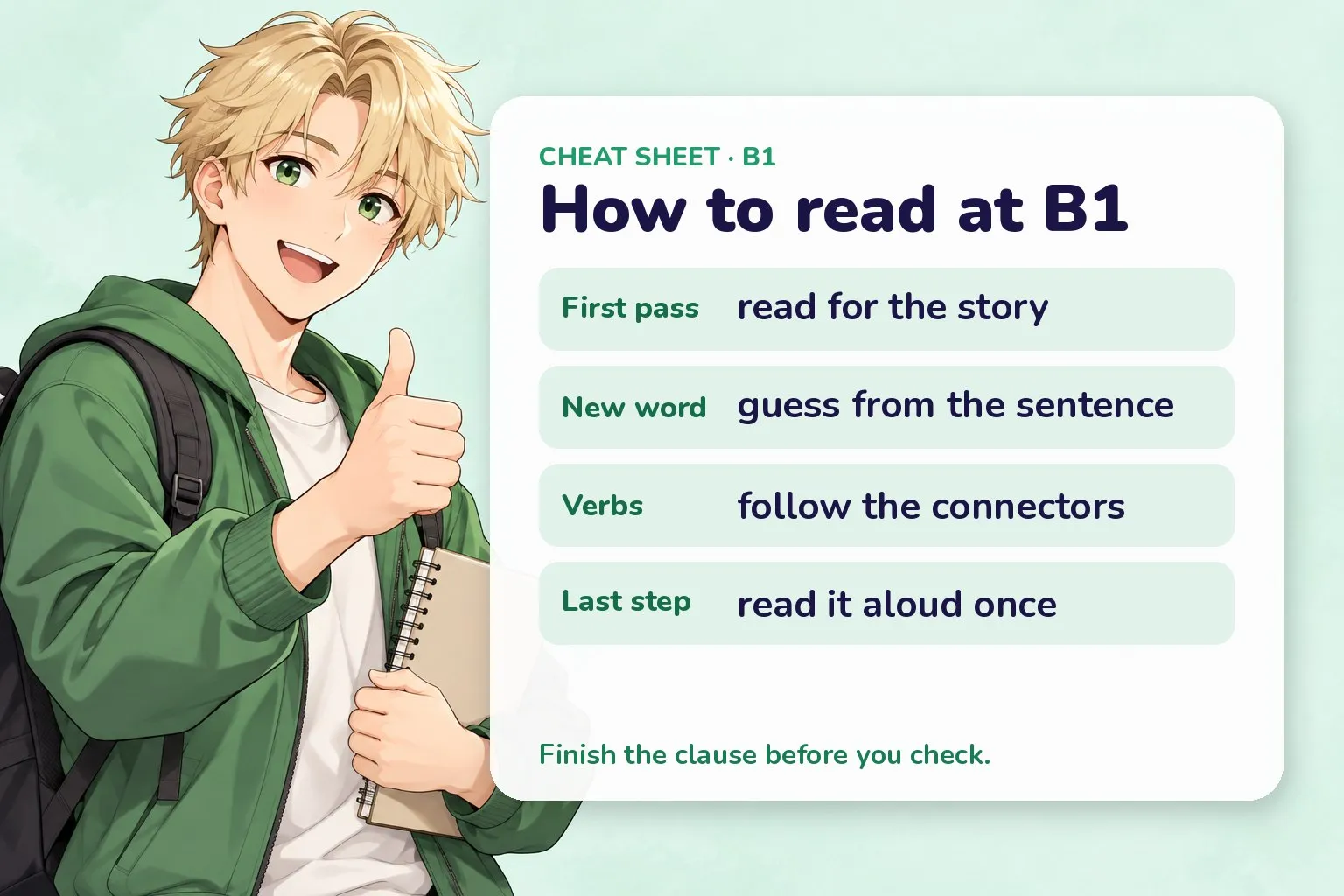
- Read once for the gist. Do not stop at every word. What happens, and how does the person feel about it?
- Read again, slowly. Follow the connectors (weil, obwohl, trotzdem) to see how ideas link.
- Check the word list under each text — only for words you could not guess.
- Read it aloud once, or play the audio sentences, so you hear the rhythm too.
- Answer the questions at the bottom without looking back, then check.
Reading 1: Ein neuer Anfang in München
Als Sofia vor drei Monaten nach München zog, kannte sie dort niemanden. Sie hatte eine neue Stelle bei einer kleinen Firma gefunden, obwohl ihr Deutsch noch nicht perfekt war. Am Anfang war alles schwierig: Sie verstand den Dialekt kaum und fühlte sich oft allein.
Eine Kollegin, die Lena heißt, half ihr sehr. Sie zeigte Sofia die Stadt und lud sie zum Essen ein. “Wenn du Fragen hast, kannst du mich immer anrufen”, sagte Lena. Langsam wurde es besser. Sofia besuchte einen Sprachkurs und lernte dort andere Leute kennen.
Heute sagt Sofia: “Ich würde die Entscheidung wieder treffen. Am Anfang war es hart, aber jetzt fühle ich mich wie zu Hause.” Sie plant schon, nächstes Jahr eine größere Wohnung zu mieten, weil ihre Schwester sie besuchen möchte.
New words (Reading 1)
| Word | Meaning | Example from the text |
|---|---|---|
| zog (ziehen) | moved (house) | Sofia zog nach München. |
| obwohl | although | …obwohl ihr Deutsch nicht perfekt war. |
| der Dialekt | dialect | Sie verstand den Dialekt kaum. |
| lud … ein (einladen) | invited | Sie lud Sofia zum Essen ein. |
| eine Entscheidung treffen | to make a decision | Ich würde die Entscheidung wieder treffen. |
| sich wie zu Hause fühlen | to feel at home | Jetzt fühle ich mich wie zu Hause. |
| mieten | to rent | …eine größere Wohnung zu mieten. |
Reading 2: Eine E-Mail über ein Wochenende
Hallo Markus,
ich muss dir unbedingt von meinem Wochenende erzählen! Am Samstag wollte ich mit dem Zug nach Hamburg fahren, aber der Zug hatte zwei Stunden Verspätung. Zuerst war ich richtig genervt, weil ich meine Freundin am Bahnhof treffen wollte.
Zum Glück hat sie gewartet. Obwohl wir weniger Zeit hatten, haben wir trotzdem viel gesehen. Wir sind durch die Altstadt gelaufen und haben am Hafen frischen Fisch gegessen. Wenn das Wetter besser gewesen wäre, hätten wir auch eine Bootstour gemacht.
Am Sonntag bin ich früh zurückgefahren, weil ich am Montag arbeiten musste. Nächstes Mal würde ich lieber einen direkten Zug nehmen. Hast du Lust, bald mitzukommen? Wir könnten zusammen ein Wochenende planen.
Viele Grüße, Nina
New words (Reading 2)
| Word | Meaning | Example from the text |
|---|---|---|
| die Verspätung | delay | Der Zug hatte zwei Stunden Verspätung. |
| genervt | annoyed | Zuerst war ich richtig genervt. |
| trotzdem | nevertheless, still | …haben wir trotzdem viel gesehen. |
| der Hafen | harbour | Wir haben am Hafen Fisch gegessen. |
| hätten … gemacht | would have done (unreal past) | …hätten wir auch eine Bootstour gemacht. |
| zurückfahren | to travel back | Am Sonntag bin ich zurückgefahren. |
| Lust haben | to feel like (doing) | Hast du Lust mitzukommen? |
How to say it
A few B1 sounds still trip English speakers:
- ö in München, könnten: a rounded “e” — say “e” with your lips pushed forward.
- ü in Glück, würde: say “ee” with rounded lips.
- z is “ts”: zurück ≈ “tsoo-RÜK”, Zug ≈ “tsook”.
- v in Verspätung, viel is an “f”: Verspätung ≈ “fer-SHPEH-tung”.
- st-/sp- at the start of a word is “sht/shp”: Stelle ≈ “SHTEL-luh”.
Example sentences
Listen to key sentences from the texts, then read them aloud.
- Als Sofia nach München zog, kannte sie niemanden.When Sofia moved to Munich, she knew no one.als = when (one past event)
- Sie hatte eine neue Stelle gefunden.She had found a new job.past perfect
- Obwohl ihr Deutsch nicht perfekt war, bekam sie die Stelle.Although her German was not perfect, she got the job.
- Eine Kollegin, die Lena heißt, half ihr sehr.A colleague called Lena helped her a lot.relative clause
- Ich würde die Entscheidung wieder treffen.I would make the decision again.würde + infinitive
- Der Zug hatte zwei Stunden Verspätung.The train was two hours late.
- Obwohl wir weniger Zeit hatten, haben wir viel gesehen.Although we had less time, we saw a lot.
- Wenn das Wetter besser gewesen wäre, hätten wir eine Bootstour gemacht.If the weather had been better, we would have taken a boat trip.unreal past
- Hast du Lust, bald mitzukommen?Do you feel like coming along soon?
Quick recap before you answer the questions.
Comprehension practice
Reading comprehension practice
Try each one, then press Check. No sign-up, nothing is sent anywhere — it all runs in your browser.
Hint: past of zeigen
Show answer
zeigte — Lena zeigte Sofia die Stadt — she showed her around.
Hint: it swims
Show answer
Fisch — They ate fresh fish at the harbour.
5 Match each connector to its meaning.
- weil
- obwohl
- trotzdem
- deshalb
Show answer
- weil → because
- obwohl → although
- trotzdem → nevertheless
- deshalb → therefore
These connectors carry the logic of a B1 text.
6 Put Sofia's story in order.
Show answer
nach München gezogen eine Kollegin kennengelernt einen Sprachkurs besucht die Entscheidung nicht bereut — Move, meet Lena, take a course, be glad she decided this.
Quiz
Intermediate German reading quiz
8 questions · pick an answer and you'll see straight away if it's right.
-
Show answer
drei Monate — She moved to Munich three months ago.
-
Show answer
eine Kollegin namens Lena — A colleague called Lena helped her a lot.
-
Show answer
eine größere Wohnung mieten — She plans to rent a bigger flat because her sister wants to visit.
-
Show answer
Der Zug hatte Verspätung — The train was two hours late while she wanted to meet her friend.
-
Show answer
Sie haben keine Bootstour gemacht — The unreal past means it did not happen — the weather was not good enough.
-
Show answer
nevertheless / still — trotzdem links to a surprising result: still, nevertheless.
-
Show answer
einmal für die Idee lesen — Read for the gist first; look up only blocking words.
-
Show answer
Do you feel like coming along? — Lust haben = to feel like (doing) something.
Next
- Build the grammar: German stem-changing verbs
- Easier first: German Reading Practice: Elementary (A2)
- New here? Start with Start Learning German Here
All German practice topics
Vocabulary, pronunciation, phrases, practice and exam help, ordered by level. Pick a topic and go straight to it. New lessons go live every day, so topics marked Coming soon fill in over the next weeks.
Practice
A1 1 topics · 1 ready
A2 2 topics · 2 ready
B1 5 topics · 2 ready
- 04 Shadowing to Improve German Speaking
- 05 German Reading Practice: Intermediate You are here
- 06 How to Practise German Writing Coming soon
- 07 German Two-Way Prepositions Practice Coming soon
- 08 German Adjective Endings Practice Coming soon