Chinese Reading Practice: Upper-Intermediate
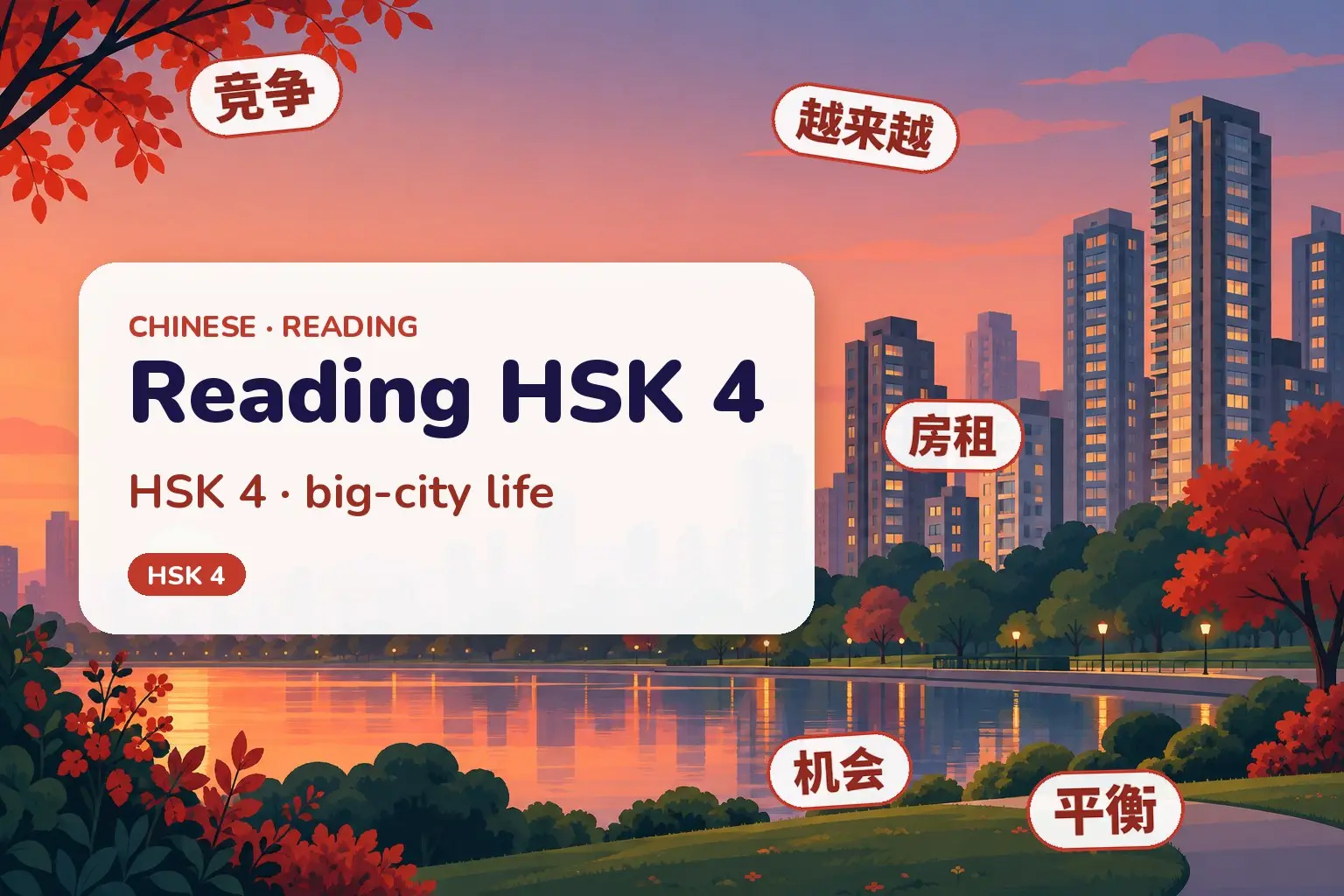
This upper-intermediate (HSK 4) Chinese reading gives an opinion text about life in big cities, with pinyin on every line. Read for the argument, track connectors like 但是 (dànshì) and 所以 (suǒyǐ), use the glossary last, then answer the questions.
Level: HSK 4 (upper-intermediate). At HSK 4 a text stops describing and starts arguing: it weighs one side against another and ends with a view. This page gives one short HSK 4 opinion text about life in big cities, with pinyin on every line, and a method to follow the argument — not just the characters.
By the end of this page you can…
…read a short upper-intermediate Chinese opinion text, follow its argument through connectors, separate the writer’s opinion from the facts, and answer comprehension and discussion questions about it.
How to read an upper-intermediate Chinese text
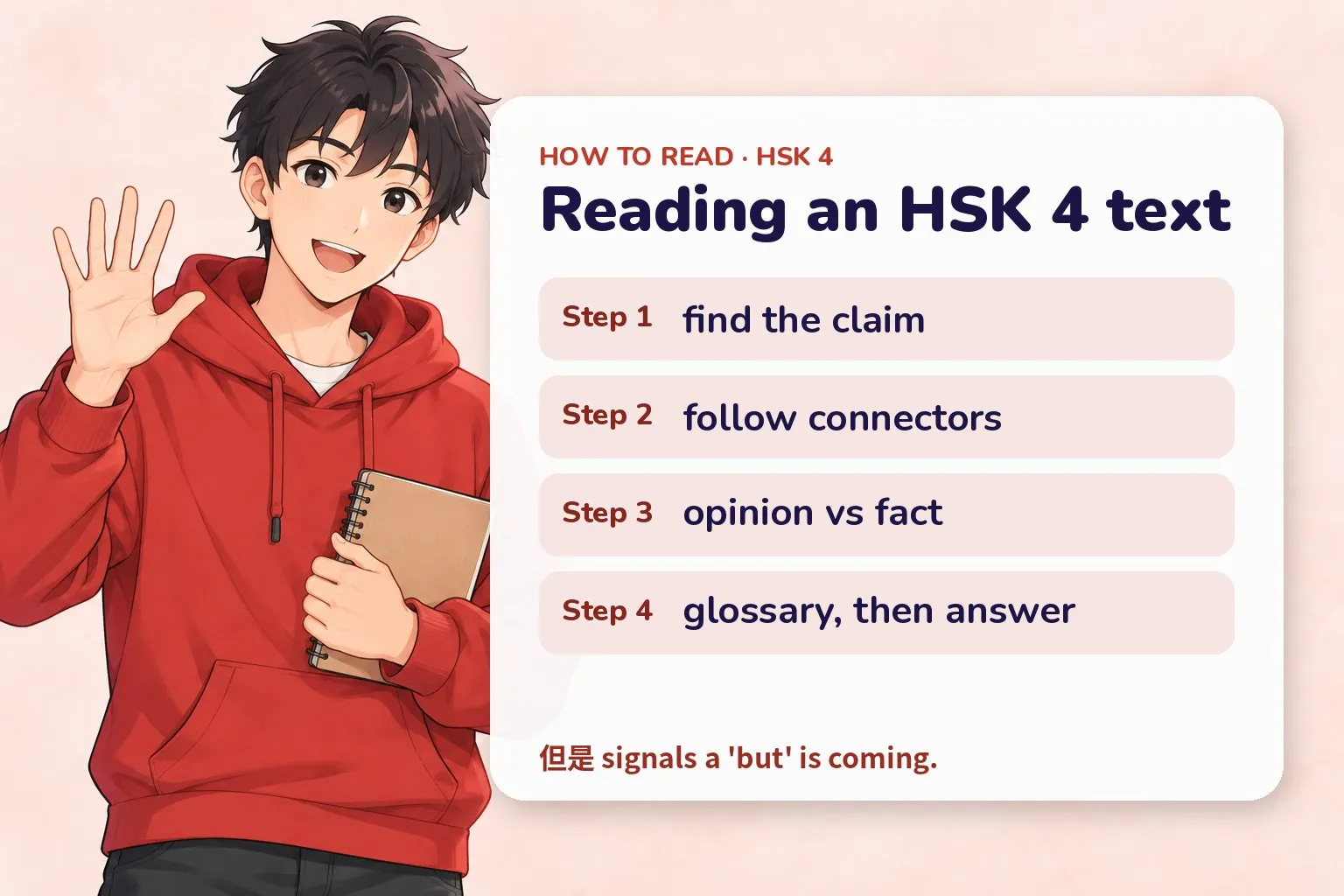
Do not translate character by character. Work in passes, each with its own goal:
- First read — the claim. Read once, using the pinyin, without stopping. What is the writer arguing?
- Second read — the connectors. Mark the linking words 但是 (dànshì, but), 所以 (suǒyǐ, so), 其实 (qíshí, actually), 因此 (yīncǐ, therefore); they carry the logic.
- Third read — opinion vs fact. Separate what the writer reports from what they think (我觉得, wǒ juéde, “I think”). HSK 4 questions test that line.
- Word list, then answer. Only now check the glossed words below, then do the questions, returning to the text to confirm each answer.
The text: 在大城市生活 (life in a big city)
现在越来越多的年轻人想去大城市工作。 (Xiànzài yuèláiyuè duō de niánqīngrén xiǎng qù dà chéngshì gōngzuò.) — More and more young people now want to work in big cities. 大城市的工作机会很多。 (Dà chéngshì de gōngzuò jīhuì hěn duō.) — Big cities have many job opportunities. 但是那里的竞争也非常激烈。 (Dànshì nàlǐ de jìngzhēng yě fēicháng jīliè.) — But the competition there is also very fierce. 大城市的房租越来越贵。 (Dà chéngshì de fángzū yuèláiyuè guì.) — Rent in big cities is getting more and more expensive. 所以很多人只能租很小的房间。 (Suǒyǐ hěn duō rén zhǐ néng zū hěn xiǎo de fángjiān.) — So many people can only rent very small rooms. 其实小城市的生活更轻松。 (Qíshí xiǎo chéngshì de shēnghuó gèng qīngsōng.) — Actually, life in smaller cities is more relaxed. 不过小城市的机会比较少。 (Búguò xiǎo chéngshì de jīhuì bǐjiào shǎo.) — However, smaller cities have relatively fewer opportunities. 因此每个人都要自己做选择。 (Yīncǐ měi ge rén dōu yào zìjǐ zuò xuǎnzé.) — Therefore everyone has to make their own choice. 我觉得生活的平衡最重要。 (Wǒ juéde shēnghuó de pínghéng zuì zhòngyào.) — I think balance in life matters most.
New words
| Chinese | Pinyin | English |
|---|---|---|
| 机会 | jīhuì | opportunity |
| 竞争 | jìngzhēng | competition |
| 激烈 | jīliè | fierce, intense |
| 房租 | fángzū | rent |
| 轻松 | qīngsōng | relaxed, easy |
| 其实 | qíshí | actually |
| 不过 | búguò | however |
| 因此 | yīncǐ | therefore |
| 平衡 | pínghéng | balance |
| 越来越 | yuèláiyuè | more and more |
Listen and repeat
Play each line, then say it aloud with the tones before you read on.
- 越来越多的年轻人想去大城市。Yuèláiyuè duō de niánqīngrén xiǎng qù dà chéngshì.More and more young people want to go to big cities.
- 大城市的工作机会很多。Dà chéngshì de gōngzuò jīhuì hěn duō.Big cities have many job opportunities.
- 但是竞争也非常激烈。Dànshì jìngzhēng yě fēicháng jīliè.But the competition is also very fierce.
- 房租越来越贵。Fángzū yuèláiyuè guì.Rent is getting more and more expensive.
- 所以很多人租小房间。Suǒyǐ hěn duō rén zū xiǎo fángjiān.So many people rent small rooms.
- 其实小城市更轻松。Qíshí xiǎo chéngshì gèng qīngsōng.Actually, smaller cities are more relaxed.
- 不过机会比较少。Búguò jīhuì bǐjiào shǎo.However, there are relatively fewer opportunities.
- 因此每个人都要自己选择。Yīncǐ měi ge rén dōu yào zìjǐ xuǎnzé.Therefore everyone has to choose for themselves.
- 我觉得平衡最重要。Wǒ juéde pínghéng zuì zhòngyào.I think balance matters most.
- 你喜欢大城市还是小城市?Nǐ xǐhuan dà chéngshì háishì xiǎo chéngshì?Do you prefer big cities or small ones?
Comprehension practice
Reading comprehension practice
Try each one, then press Check. No sign-up, nothing is sent anywhere — it all runs in your browser.
Hint: it corrects the expected view
Show answer
qíshí — 其实 (qíshí) means 'actually'.
4 Order the words: 'Rent is getting more and more expensive.'
Show answer
房租 (fángzū) 越来越贵 (yuèláiyuè guì) — 房租越来越贵 (fángzū yuèláiyuè guì).
5 Match each connector to its job.
- 但是 (dànshì)
- 所以 (suǒyǐ)
- 其实 (qíshí)
- 因此 (yīncǐ)
Show answer
- 但是 (dànshì) → but / however
- 所以 (suǒyǐ) → so
- 其实 (qíshí) → actually
- 因此 (yīncǐ) → therefore
但是 (dànshì) but; 所以 (suǒyǐ) so; 其实 (qíshí) actually; 因此 (yīncǐ) therefore.
Quick recap before you answer.
Quiz
Chinese HSK 4 reading comprehension quiz
8 questions · pick an answer and you'll see straight away if it's right.
-
Show answer
young people, 年轻人 (niánqīngrén) — 越来越多的年轻人想去大城市工作 (yuèláiyuè duō de niánqīngrén…).
-
Show answer
many job opportunities, 很多工作机会 (hěn duō gōngzuò jīhuì) — 大城市的工作机会很多 (dà chéngshì de gōngzuò jīhuì hěn duō).
-
Show answer
it rises, 越来越贵 (yuèláiyuè guì) — 大城市的房租越来越贵 (fángzū yuèláiyuè guì).
-
Show answer
life is more relaxed but with fewer chances, 更轻松但机会少 (gèng qīngsōng dàn jīhuì shǎo) — 其实小城市的生活更轻松… 不过机会比较少 (qíshí… gèng qīngsōng… búguò jīhuì bǐjiào shǎo).
-
Show answer
'more and more' — 越来越 (yuèláiyuè) means 'more and more', marking a rising trend.
-
Show answer
the writer's real / corrected point — 其实 (qíshí, 'actually') introduces the point the writer really wants to make.
-
Show answer
everyone must choose, and balance matters most, 平衡最重要 (pínghéng zuì zhòngyào) — 因此每个人都要自己做选择 (yīncǐ měi ge rén dōu yào zìjǐ zuò xuǎnzé)… 我觉得生活的平衡最重要 (wǒ juéde pínghéng zuì zhòngyào).
-
Show answer
read once to find the main claim — The first pass is for the writer's overall claim.
Discussion
Try answering in simple Chinese, reusing the text’s words: 你喜欢大城市还是小城市? (Nǐ xǐhuan dà chéngshì háishì xiǎo chéngshì?) — Do you prefer big or small cities? 为什么? (Wèishénme?) — Why? There is no single right answer; borrow 机会 (jīhuì), 竞争 (jìngzhēng) and 平衡 (pínghéng), and connect your ideas with 但是 (dànshì) and 所以 (suǒyǐ).
Next
- Go back over the intermediate text: Chinese Reading Practice: Intermediate
- Build the grammar behind the text in the Chinese grammar section
- New here? Start with Start Learning Chinese Here
All Chinese practice topics
Vocabulary, pronunciation, phrases, practice and exam help, ordered by level. Pick a topic and go straight to it. New lessons go live every day, so topics marked Coming soon fill in over the next weeks.
Practice
HSK 1 1 topics · 1 ready
HSK 2 4 topics · 2 ready
- 02 How to Practise Chinese Listening
- 03 Chinese Reading Practice: Elementary
- 04 Tone Pairs Practice Coming soon
- 05 The Particle 了 (le) Practice Coming soon
HSK 3 5 topics · 2 ready
- 06 Shadowing to Improve Chinese Speaking
- 07 Chinese Reading Practice: Intermediate
- 08 How to Practise Chinese Writing Coming soon
- 09 The 把 (bǎ) Construction Practice Coming soon
- 10 Resultative Complements Practice Coming soon
HSK 4 1 topics · 1 ready
- 11 Chinese Reading Practice: Upper-Intermediate You are here