Chinese Reading Practice: Elementary
This elementary (HSK 2) Chinese reading gives a short text with pinyin about someone's weekend. Read it once for the gist, again to guess new words, use the glossed word list if stuck, then answer the comprehension questions.
Level: elementary (HSK 2). Once you can read a beginner text, the next step is a slightly longer one that tells a story in the past. This page gives one short HSK 2 text with pinyin about a weekend and a clear method to work through it — a few focused minutes that push your reading forward.
By the end of this page you can…
…read a short elementary Chinese text about past events, recognise 了 (le), 所以 (suǒyǐ) and 得 (de), and answer questions about what happened.
How to read an elementary Chinese text
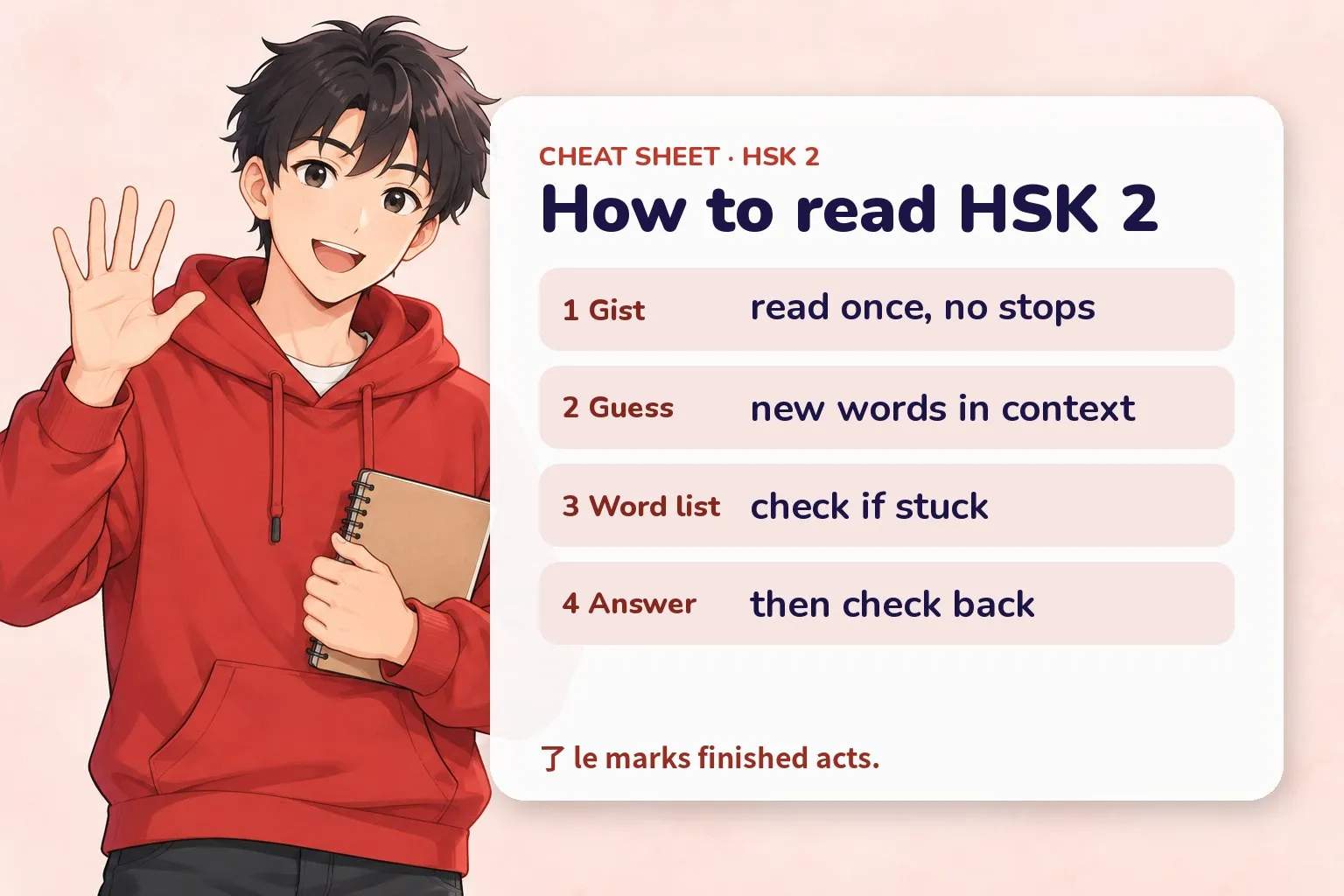
Do not translate character by character. Work in passes, each with its own goal:
- First read — the gist. Read the whole text once without stopping. What happened, and when?
- Second read — guess. Read again and try to work out new characters from the words around them before you check anything.
- Word list. Only now look at the glossed words below for anything still unclear.
- Answer, then check back. Do the comprehension questions, returning to the text to confirm each answer.
The text: A weekend
上个周末我很忙。 (Shàng ge zhōumò wǒ hěn máng.) — Last weekend I was very busy. 星期六早上我去商店买东西。 (Xīngqīliù zǎoshang wǒ qù shāngdiàn mǎi dōngxi.) — Saturday morning, I went to the shop to buy things. 我买了水果和面包。 (Wǒ mǎi le shuǐguǒ hé miànbāo.) — I bought fruit and bread. 然后我和朋友一起喝咖啡。 (Ránhòu wǒ hé péngyou yìqǐ hē kāfēi.) — Then I drank coffee together with a friend. 下午天气很好所以我们去了公园。 (Xiàwǔ tiānqì hěn hǎo, suǒyǐ wǒmen qù le gōngyuán.) — In the afternoon the weather was good, so we went to the park. 晚上我在家看书。 (Wǎnshang wǒ zài jiā kàn shū.) — In the evening I read at home. 星期天我休息没有工作。 (Xīngqītiān wǒ xiūxi, méiyǒu gōngzuò.) — On Sunday I rested, I didn’t work. 这个周末我过得很愉快。 (Zhège zhōumò wǒ guò de hěn yúkuài.) — I had a very pleasant weekend.
New words
| Chinese | Pinyin | English |
|---|---|---|
| 周末 | zhōumò | weekend |
| 商店 | shāngdiàn | shop |
| 东西 | dōngxi | things / stuff |
| 水果 | shuǐguǒ | fruit |
| 面包 | miànbāo | bread |
| 一起 | yìqǐ | together |
| 天气 | tiānqì | weather |
| 所以 | suǒyǐ | so / therefore |
| 休息 | xiūxi | to rest |
| 愉快 | yúkuài | pleasant / happy |
Listen and repeat
Play each line, then say it aloud before you read on.
- 上个周末我很忙。Shàng ge zhōumò wǒ hěn máng.Last weekend I was very busy.
- 我去商店买东西。Wǒ qù shāngdiàn mǎi dōngxi.I went to the shop to buy things.
- 我买了水果和面包。Wǒ mǎi le shuǐguǒ hé miànbāo.I bought fruit and bread.了 le marks the completed action
- 然后我和朋友一起喝咖啡。Ránhòu wǒ hé péngyou yìqǐ hē kāfēi.Then I had coffee with a friend.
- 下午天气很好。Xiàwǔ tiānqì hěn hǎo.In the afternoon the weather was good.
- 所以我们去了公园。Suǒyǐ wǒmen qù le gōngyuán.So we went to the park.所以 suǒyǐ = so
- 晚上我在家看书。Wǎnshang wǒ zài jiā kàn shū.In the evening I read at home.
- 星期天我休息。Xīngqītiān wǒ xiūxi.On Sunday I rested.
- 我没有工作。Wǒ méiyǒu gōngzuò.I didn't work.没有 méiyǒu negates the past
- 这个周末我过得很愉快。Zhège zhōumò wǒ guò de hěn yúkuài.I had a very pleasant weekend.得 de before the result
Quick recap before you answer the questions.
Comprehension practice
Reading comprehension practice
Try each one, then press Check. No sign-up, nothing is sent anywhere — it all runs in your browser.
Hint: the connector for 'so'
Show answer
suǒyǐ — 所以 (suǒyǐ) means 'so / therefore'.
4 Put the words in order: 'I bought fruit.'
Show answer
我 (wǒ) 买了 (mǎi le) 水果 (shuǐguǒ) — Subject + verb + 了 + object: 我买了水果 (wǒ mǎi le shuǐguǒ).
5 Match each word to its meaning.
- 商店 (shāngdiàn)
- 天气 (tiānqì)
- 休息 (xiūxi)
- 愉快 (yúkuài)
Show answer
- 商店 (shāngdiàn) → shop
- 天气 (tiānqì) → weather
- 休息 (xiūxi) → to rest
- 愉快 (yúkuài) → pleasant
shāngdiàn shop; tiānqì weather; xiūxi rest; yúkuài pleasant.
Quiz
Chinese reading comprehension quiz
8 questions · pick an answer and you'll see straight away if it's right.
-
Show answer
very busy, 很忙 (hěn máng) — 上个周末我很忙 (shàng ge zhōumò wǒ hěn máng), 'last weekend I was very busy'.
-
Show answer
the shop, 商店 (shāngdiàn) — 我去商店买东西 (wǒ qù shāngdiàn mǎi dōngxi).
-
Show answer
the weather was good, 天气很好 (tiānqì hěn hǎo) — 下午天气很好,所以我们去了公园 (xiàwǔ tiānqì hěn hǎo, suǒyǐ wǒmen qù le gōngyuán).
-
Show answer
read at home, 在家看书 (zài jiā kàn shū) — 晚上我在家看书 (wǎnshang wǒ zài jiā kàn shū).
-
Show answer
rested and didn't work, 休息 (xiūxi) — 星期天我休息,没有工作 (xīngqītiān wǒ xiūxi, méiyǒu gōngzuò).
-
Show answer
the action is completed — 买了 (mǎi le) = 'bought'; 了 (le) marks a completed action.
-
Show answer
read once for the gist — The first pass is for the gist — the overall meaning.
-
Show answer
it was pleasant, 很愉快 (hěn yúkuài) — 这个周末我过得很愉快 (zhège zhōumò wǒ guò de hěn yúkuài).
Next
- Go back over the beginner text: Chinese Reading Practice: Beginner
- Build the grammar behind the text in the Chinese grammar section
- New here? Start with Start Learning Chinese Here
All Chinese practice topics
Vocabulary, pronunciation, phrases, practice and exam help, ordered by level. Pick a topic and go straight to it. New lessons go live every day, so topics marked Coming soon fill in over the next weeks.
Practice
HSK 1 1 topics · 1 ready
HSK 2 4 topics · 2 ready
- 02 How to Practise Chinese Listening
- 03 Chinese Reading Practice: Elementary You are here
- 04 Tone Pairs Practice Coming soon
- 05 The Particle 了 (le) Practice Coming soon
HSK 3 5 topics · 2 ready
- 06 Shadowing to Improve Chinese Speaking
- 07 Chinese Reading Practice: Intermediate
- 08 How to Practise Chinese Writing Coming soon
- 09 The 把 (bǎ) Construction Practice Coming soon
- 10 Resultative Complements Practice Coming soon