Japanese Reading Practice: Elementary
Elementary Japanese reading means short connected passages a step above beginner, built from common N4 words and past-tense sentences. Read for the gist, then reread for the time words and connectors that hold the story together.
Level: N4. (Note: the JLPT publishes no official grammar list; the level shown is the common textbook convention.) Elementary reading is one step past the beginner self-introduction. The sentences are still short, but now they connect: things happen in order, in the past, and the time words tell you what came first.
By the end of this page you can…
…read a short N4 account of someone’s weekend, follow the order of events, and answer questions about it.
How to read an elementary text
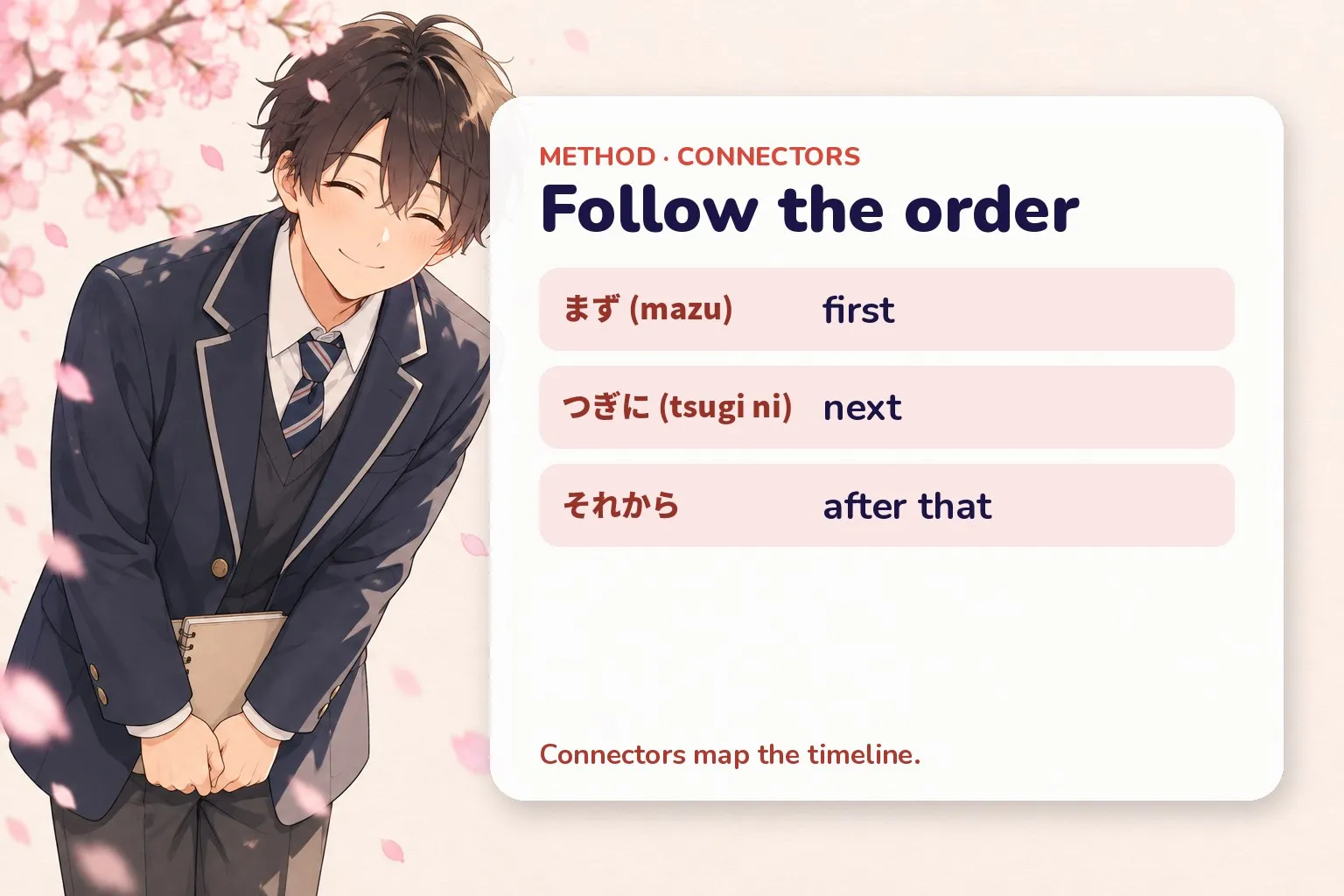
Keep the same three habits as at beginner level, with one addition: track the connectors. Words like まず (mazu, “first”), つぎに (tsugi ni, “next”) and それから (sorekara, “after that”) carry the timeline, so spotting them tells you the sequence even before you know every noun.
The graded text
Read this short account of a weekend one line at a time. Each line shows the Japanese, its reading, and the English.
- 先週の土曜日、友達と京都に行きました。Senshū no doyōbi, tomodachi to Kyōto ni ikimashita.Last Saturday, I went to Kyoto with a friend.past tense + と for 'with'
- 朝早く電車に乗りました。Asa hayaku densha ni norimashita.We got on the train early in the morning.
- まず、古いお寺を見ました。Mazu, furui otera o mimashita.First, we saw an old temple.まず = 'first'
- つぎに、公園でお弁当を食べました。Tsugi ni, kōen de obentō o tabemashita.Next, we ate a packed lunch in the park.つぎに = 'next'
- 天気がよかったので、とても気持ちよかったです。Tenki ga yokatta node, totemo kimochi yokatta desu.The weather was good, so it felt very pleasant.ので = 'because/so'
- それから、お土産を買いました。Sorekara, omiyage o kaimashita.After that, we bought souvenirs.それから = 'after that'
- 友達は小さい人形を買いました。Tomodachi wa chiisai ningyō o kaimashita.My friend bought a small doll.
- 私はきれいな絵葉書を選びました。Watashi wa kirei na ehagaki o erabimashita.I chose a pretty postcard.
- 夕方、少し疲れましたが、楽しかったです。Yūgata, sukoshi tsukaremashita ga, tanoshikatta desu.In the evening I was a little tired, but it was fun.が here = 'but'
- また京都に行きたいと思います。Mata Kyōto ni ikitai to omoimasu.I think I want to go to Kyoto again.
Key vocabulary
These are some of the most common elementary words in the text.
| Word | Reading | English |
|---|---|---|
| 先週 | senshū | last week |
| 土曜日 | doyōbi | Saturday |
| 電車 | densha | train |
| お寺 | otera | temple |
| お弁当 | obentō | boxed lunch |
| 天気 | tenki | weather |
| お土産 | omiyage | souvenir |
| 絵葉書 | ehagaki | postcard |
| 夕方 | yūgata | evening |
| 疲れました | tsukaremashita | got tired |
Check you understood
- Where did the writer go, and with whom? (To Kyoto, with a friend.)
- What did they do first? (Saw an old temple.)
- What did they eat, and where? (A packed lunch, in the park.)
- What did each person buy? (The friend a small doll; the writer a postcard.)
- How did the writer feel by evening? (A little tired, but it was fun.)
Extension: read a little more every day
Once this passage feels easy, change the goal rather than the text at first: read it aloud for smooth rhythm, then cover the English and translate each line yourself, then retell the weekend from memory in your own short sentences. When you are ready for new material, choose N4 graded readers or simple blog-style diaries, and keep each session short.
Practice
Elementary reading practice
Try each one, then press Check. No sign-up, nothing is sent anywhere — it all runs in your browser.
Hint: starts with ma
Show answer
mazu — まず (mazu) means 'first' and marks the first event.
3 Match each word with its meaning.
- お寺 (otera)
- お弁当 (obentō)
- お土産 (omiyage)
- 絵葉書 (ehagaki)
Show answer
- お寺 (otera) → temple
- お弁当 (obentō) → boxed lunch
- お土産 (omiyage) → souvenir
- 絵葉書 (ehagaki) → postcard
These are common N4 words from the text.
Quick recap before you practise.
Quiz
Elementary reading quiz
7 questions · pick an answer and you'll see straight away if it's right.
-
Show answer
reread a short passage with a new goal each pass — Short connected texts, reread with a purpose, build elementary reading best.
-
Show answer
a friend — 友達と京都に行きました (tomodachi to Kyōto ni ikimashita) = 'went to Kyoto with a friend'.
-
Show answer
next — つぎに (tsugi ni) means 'next'.
-
Show answer
saw an old temple — まず、古いお寺を見ました (mazu, furui otera o mimashita) = 'first, we saw an old temple'.
-
Show answer
souvenir — お土産 (omiyage) means souvenir.
-
Show answer
a postcard — きれいな絵葉書を選びました (kirei na ehagaki o erabimashita) = 'chose a pretty postcard'.
-
Show answer
they reveal the order of events — まず (mazu), つぎに (tsugi ni), それから (sorekara) map the timeline, so the story makes sense early.
Next
- Build the grammar behind the sentences in the Japanese grammar section
- Warm up with the beginner text first: Japanese Reading Practice: Beginner
- New here? Start with Start Learning Japanese Here
All Japanese practice topics
Vocabulary, pronunciation, phrases, practice and exam help, ordered by level. Pick a topic and go straight to it. New lessons go live every day, so topics marked Coming soon fill in over the next weeks.
Practice
N5 3 topics · 1 ready
- 01 Japanese Reading Practice: Beginner
- 02 Hiragana Reading & Writing Practice Coming soon
- 03 Katakana Reading & Writing Practice Coming soon
N4 4 topics · 2 ready
- 04 How to Practise Japanese Listening
- 05 Japanese Reading Practice: Elementary You are here
- 06 Japanese Particles Review Set Coming soon
- 07 Sentence-Ending Particles Practice Coming soon
N3 4 topics · 2 ready
- 08 Shadowing to Improve Japanese Speaking
- 09 Japanese Reading Practice: Intermediate
- 10 How to Practise Japanese Writing Coming soon
- 11 Giving & Receiving (ageru/kureru/morau) Practice Coming soon
N2 2 topics · 1 ready
- 12 Japanese Reading Practice: Upper-Intermediate
- 13 Japanese Keigo Practice Set Coming soon