Arabic Reading Practice: Intermediate
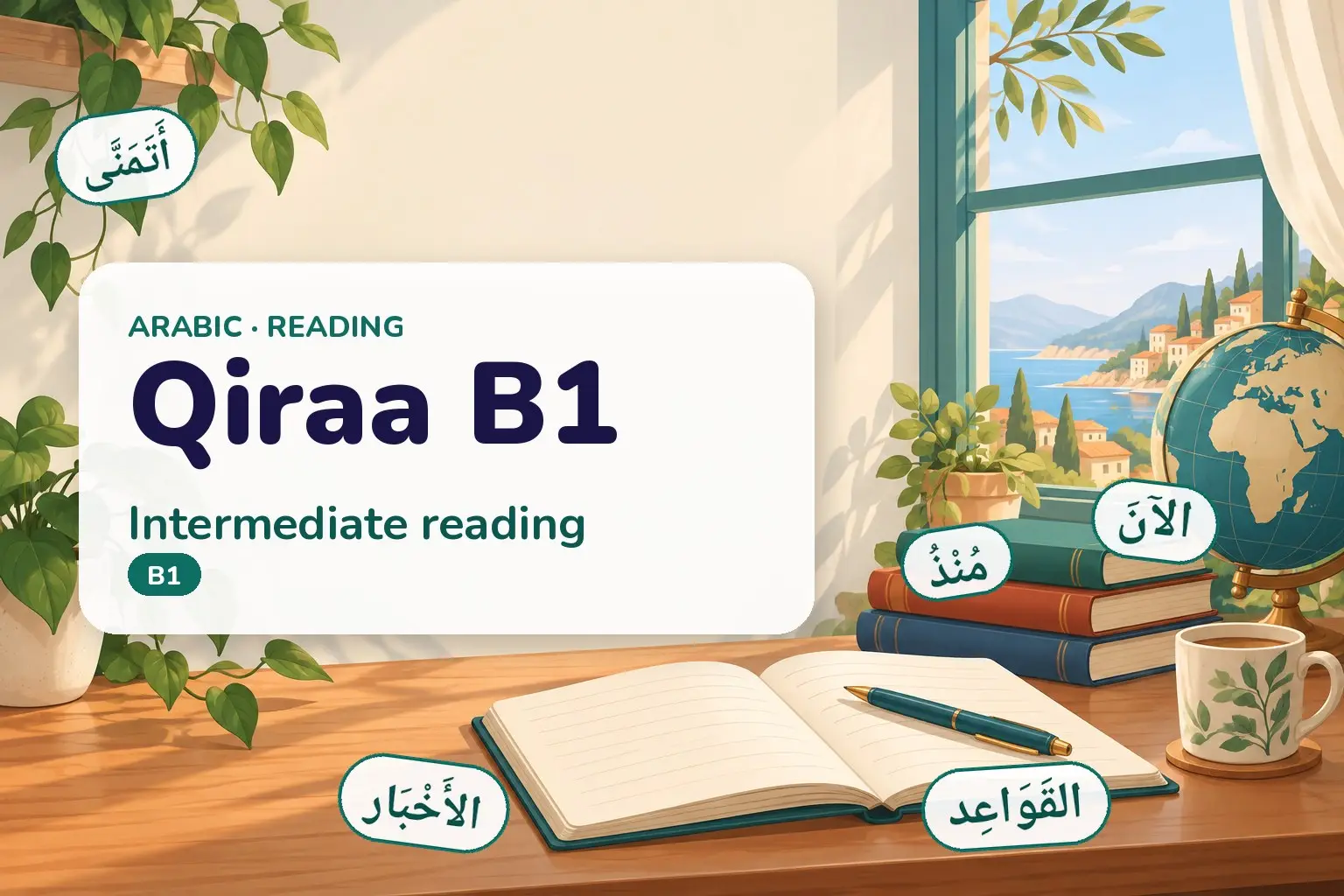
This intermediate Arabic reading gives a short, fully-vowelled text about learning Arabic, mixing past, present and future. Read for the gist, track the time markers, use the glossary last, then answer the comprehension and discussion questions.
Level: Intermediate. At this stage a text stops living in one tense: it moves between what was true before, what is true now, and what will happen. This page gives one short, fully-vowelled text about learning Arabic and a clear method to work through it — a few focused minutes that push your reading forward.
By the end of this page you can…
…read a short intermediate Arabic text that mixes tenses, follow it through its time markers, pick out the writer’s opinion, and answer comprehension and discussion questions about it.
How to read an intermediate Arabic text
Do not translate word by word. Work in passes, each with its own goal:
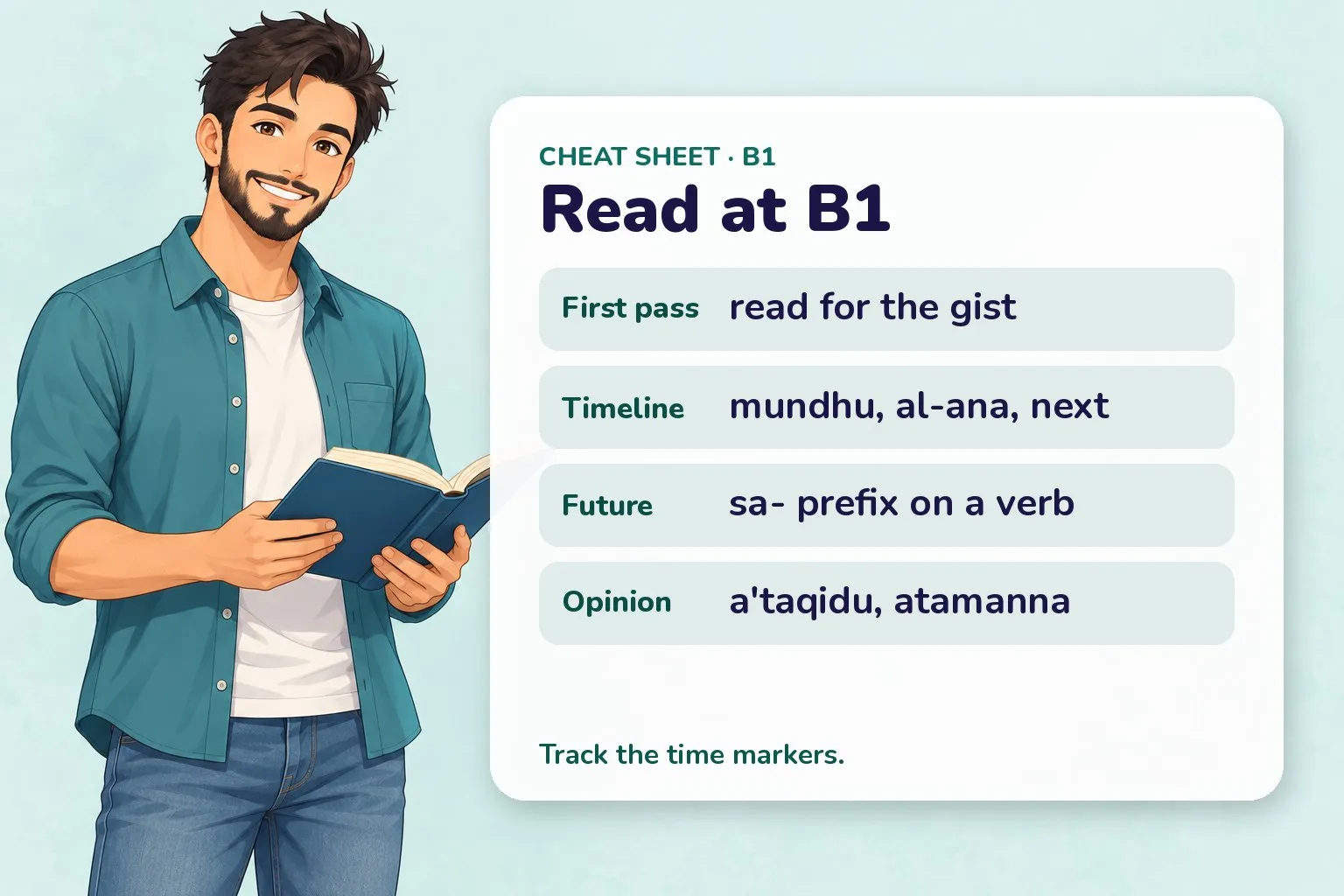
- First read — the gist. Read the whole text once without stopping. Who is speaking, and what is the situation?
- Second read — the timeline. Read again and mark the time markers مُنْذُ (mundhu, since/for), الآنَ (al-āna, now) and القَادِمَة (al-qādima, next); they tell you past, present or future.
- Third read — the opinion. Find where the writer gives a view: أَعْتَقِدُ (aʿtaqidu, I think), أَتَمَنَّى (atamannā, I hope).
- Word list, then answer. Only now check the glossed words below, then do the questions, returning to the text to confirm each answer.
The text: Learning Arabic
أَدْرُسُ اللُّغَةَ العَرَبِيَّةَ مُنْذُ سَنَتَيْنِ. (adrusu l-lughata l-ʿarabiyyata mundhu sanatayni.) — I have been studying Arabic for two years. فِي البِدَايَةِ كَانَتِ القِرَاءَةُ صَعْبَةً جِدًّا. (fī l-bidāyati kānati l-qirāʾatu ṣaʿbatan jiddan.) — At first, reading was very difficult. الآنَ أَسْتَطِيعُ أَنْ أَقْرَأَ قِصَصًا قَصِيرَةً. (al-āna astaṭīʿu an aqraʾa qiṣaṣan qaṣīratan.) — Now I can read short stories. أَعْتَقِدُ أَنَّ أَصْعَبَ شَيْءٍ هُوَ القَوَاعِدُ. (aʿtaqidu anna aṣʿaba shayʾin huwa l-qawāʿidu.) — I think the hardest thing is the grammar. كُلَّ يَوْمٍ أَقْرَأُ الأَخْبَارَ بِالعَرَبِيَّةِ. (kulla yawmin aqraʾu l-akhbāra bi-l-ʿarabiyyati.) — Every day I read the news in Arabic. وَأَكْتُبُ الكَلِمَاتِ الجَدِيدَةَ فِي دَفْتَرٍ. (wa-aktubu l-kalimāti l-jadīdata fī daftarin.) — And I write the new words in a notebook. فِي السَّنَةِ القَادِمَةِ سَأُسَافِرُ إِلَى مِصْرَ. (fī s-sanati l-qādimati sa-usāfiru ilā miṣra.) — Next year I will travel to Egypt. أَتَمَنَّى أَنْ أَتَكَلَّمَ مَعَ النَّاسِ هُنَاكَ. (atamannā an atakallama maʿa n-nāsi hunāka.) — I hope to speak with people there.
New words
| Arabic | Reading | English |
|---|---|---|
| مُنْذُ | mundhu | since / for |
| البِدَايَة | al-bidāya | the beginning |
| صَعْب | ṣaʿb | difficult |
| أَسْتَطِيعُ | astaṭīʿu | I can / am able to |
| قِصَص قَصِيرَة | qiṣaṣ qaṣīra | short stories |
| القَوَاعِد | al-qawāʿid | grammar (the rules) |
| الأَخْبَار | al-akhbār | the news |
| دَفْتَر | daftar | notebook |
| القَادِمَة | al-qādima | next / coming |
| أَتَمَنَّى | atamannā | I hope / wish |
Listen and repeat
Play each line, then say it aloud before you read on.
- أَدْرُسُ اللُّغَةَ العَرَبِيَّةَ مُنْذُ سَنَتَيْنِ.adrusu l-lughata l-ʿarabiyyata mundhu sanatayni.I have been studying Arabic for two years.مُنْذُ = for/since
- فِي البِدَايَةِ كَانَتِ القِرَاءَةُ صَعْبَةً.fī l-bidāyati kānati l-qirāʾatu ṣaʿbatan.At first, reading was difficult.كَانَ = was (past)
- الآنَ أَسْتَطِيعُ أَنْ أَقْرَأَ.al-āna astaṭīʿu an aqraʾa.Now I can read.الآنَ = now (present)
- أَعْتَقِدُ أَنَّ القَوَاعِدَ صَعْبَةٌ.aʿtaqidu anna l-qawāʿida ṣaʿbatun.I think the grammar is difficult.أَعْتَقِدُ = I think
- كُلَّ يَوْمٍ أَقْرَأُ الأَخْبَارَ.kulla yawmin aqraʾu l-akhbāra.Every day I read the news.
- أَكْتُبُ الكَلِمَاتِ الجَدِيدَةَ.aktubu l-kalimāti l-jadīdata.I write the new words.
- فِي السَّنَةِ القَادِمَةِ سَأُسَافِرُ.fī s-sanati l-qādimati sa-usāfiru.Next year I will travel.سَـ = future prefix
- سَأُسَافِرُ إِلَى مِصْرَ.sa-usāfiru ilā miṣra.I will travel to Egypt.
- أَتَمَنَّى أَنْ أَتَكَلَّمَ مَعَ النَّاسِ.atamannā an atakallama maʿa n-nāsi.I hope to speak with people.أَتَمَنَّى = I hope
- العَرَبِيَّةُ لُغَةٌ جَمِيلَةٌ.al-ʿarabiyyatu lughatun jamīlatun.Arabic is a beautiful language.
Comprehension practice
Reading comprehension practice
Try each one, then press Check. No sign-up, nothing is sent anywhere — it all runs in your browser.
Hint: the word for 'now'
Show answer
al-āna — الآنَ (al-āna) means 'now'.
4 Put the words in order: 'I will travel to Egypt.'
Show answer
سَأُسَافِرُ (sa-usāfiru) إِلَى مِصْرَ (ilā miṣra) — Verb then place: سَأُسَافِرُ إِلَى مِصْرَ (sa-usāfiru ilā miṣra).
5 Match each word to its meaning.
- مُنْذُ (mundhu)
- القَوَاعِد (al-qawāʿid)
- الأَخْبَار (al-akhbār)
- دَفْتَر (daftar)
Show answer
- مُنْذُ (mundhu) → since / for
- القَوَاعِد (al-qawāʿid) → grammar
- الأَخْبَار (al-akhbār) → the news
- دَفْتَر (daftar) → notebook
mundhu since; al-qawāʿid grammar; al-akhbār news; daftar notebook.
Quick recap before you answer.
Quiz
Arabic reading comprehension quiz
8 questions · pick an answer and you'll see straight away if it's right.
-
Show answer
learning Arabic, تَعَلُّم العَرَبِيَّة (taʿallum al-ʿarabiyya) — The writer describes studying Arabic over two years.
-
Show answer
very difficult, صَعْبَة جِدًّا (ṣaʿba jiddan) — فِي البِدَايَةِ كَانَتِ القِرَاءَةُ صَعْبَةً جِدًّا (kānati l-qirāʾatu ṣaʿbatan jiddan).
-
Show answer
short stories, قِصَص قَصِيرَة (qiṣaṣ qaṣīra) — الآنَ أَسْتَطِيعُ أَنْ أَقْرَأَ قِصَصًا قَصِيرَةً (astaṭīʿu an aqraʾa qiṣaṣan qaṣīratan).
-
Show answer
reads the news in Arabic, يَقْرَأُ الأَخْبَار (yaqraʾu l-akhbār) — كُلَّ يَوْمٍ أَقْرَأُ الأَخْبَارَ بِالعَرَبِيَّةِ (kulla yawmin aqraʾu l-akhbāra bi-l-ʿarabiyyati).
-
Show answer
to Egypt, مِصْر (miṣr) — فِي السَّنَةِ القَادِمَةِ سَأُسَافِرُ إِلَى مِصْرَ (sa-usāfiru ilā miṣra).
-
Show answer
future — سَـ (sa-) marks the future: 'I will travel'.
-
Show answer
the writer's hope / wish — أَتَمَنَّى (atamannā) means 'I hope / wish'.
-
Show answer
read once for the gist — The first pass is for the gist — the overall meaning.
Discussion
Try answering in simple Arabic, reusing the text’s words: مُنْذُ مَتَى تَدْرُسُ العَرَبِيَّةَ؟ (mundhu matā tadrusu l-ʿarabiyyata?) — How long have you been studying Arabic? مَا أَصْعَبُ شَيْءٍ بِالنِّسْبَةِ لَكَ؟ (mā aṣʿabu shayʾin bi-n-nisbati laka?) — What is hardest for you? There is no single right answer; borrow مُنْذُ (mundhu), القَوَاعِد (al-qawāʿid) and أَتَمَنَّى (atamannā) to build your own sentences.
Next
- Go back over the elementary text: Arabic Reading Practice: Elementary
- Build the grammar behind the text in the Arabic grammar section
- New here? Start with Start Learning Arabic Here
All Arabic practice topics
Vocabulary, pronunciation, phrases, practice and exam help, ordered by level. Pick a topic and go straight to it. New lessons go live every day, so topics marked Coming soon fill in over the next weeks.
Practice
Beginner 1 topics · 1 ready
Elementary 3 topics · 2 ready
- 02 How to Practise Arabic Listening
- 03 Arabic Reading Practice: Elementary
- 04 Idafa (Possessive Construction) Practice Coming soon
Intermediate 3 topics · 2 ready
- 05 Shadowing to Improve Arabic Speaking
- 06 Arabic Reading Practice: Intermediate You are here
- 07 How to Practise Arabic Writing Coming soon