Italian Definite Articles: Il, Lo, La, I, Gli, Le
Short answer
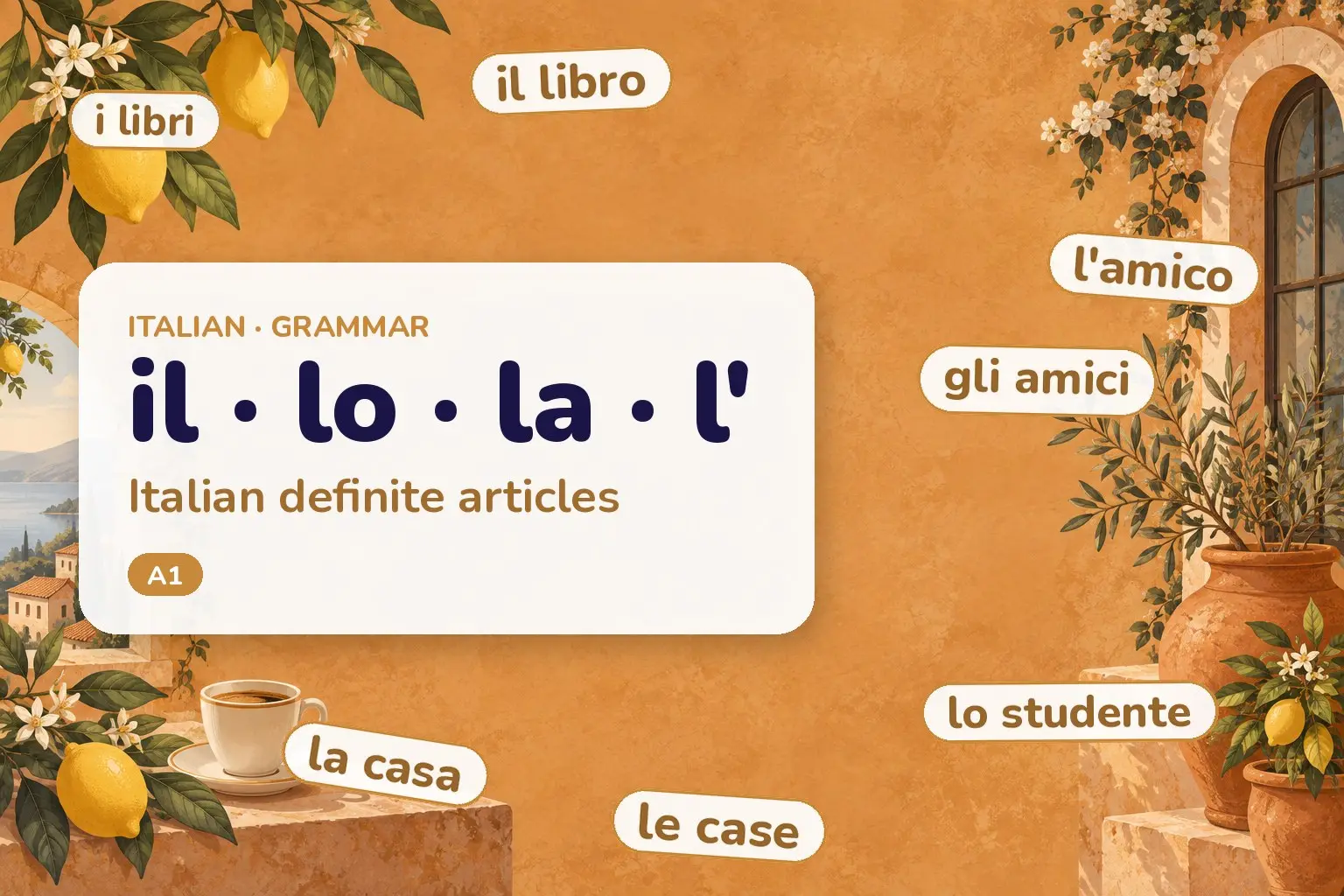
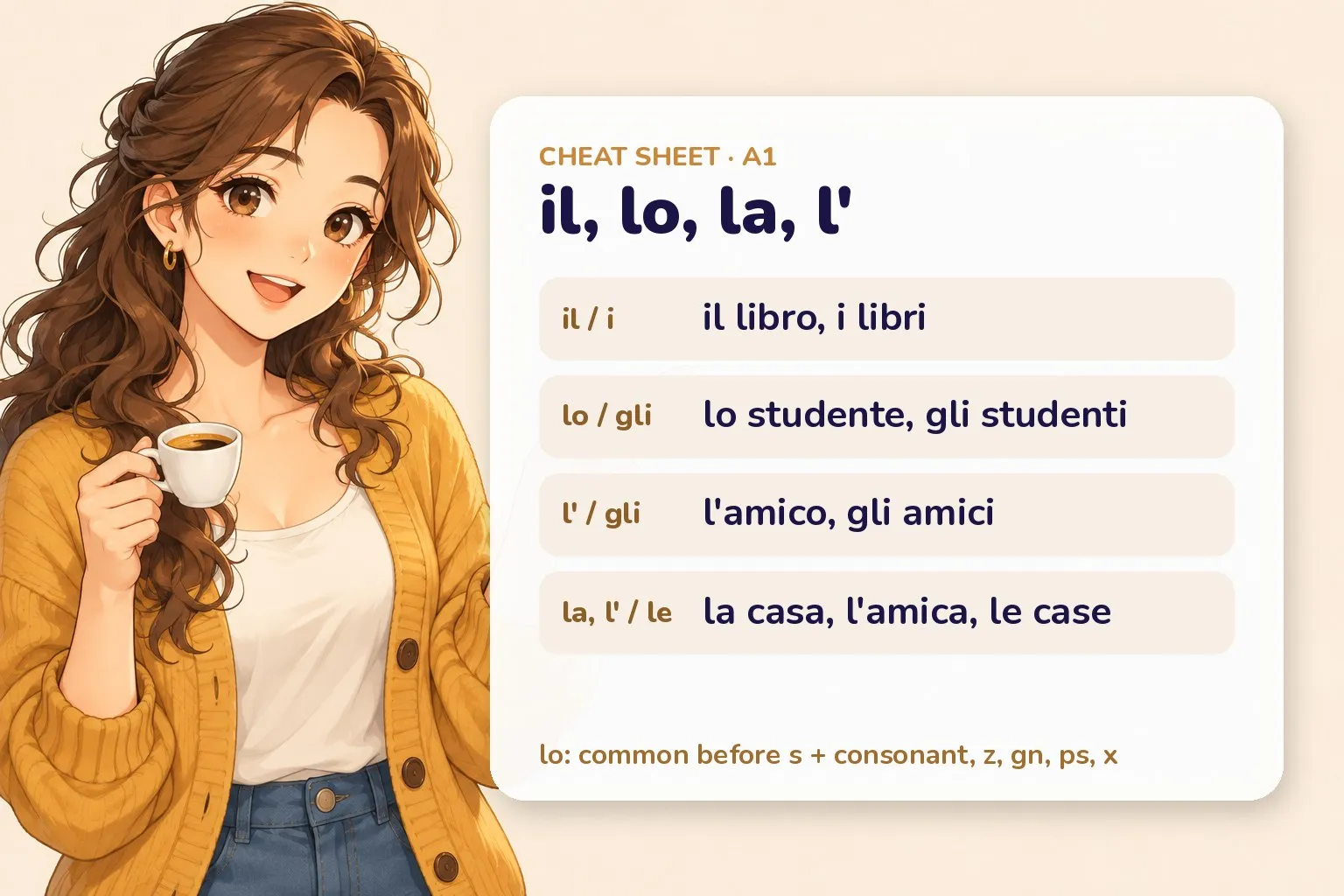
Italian has seven forms of 'the'. Masculine: il before most consonants (il libro), lo before s + consonant, z, gn, ps (lo studente), l' before a vowel (l'amico); plural i or gli. Feminine: la (la casa), l' before a vowel (l'amica), plural le. The choice depends on gender, number and the first sound of the next word.
Level: A1. Italian nouns are masculine or feminine, and the word for “the” changes with gender, number and — unusually — the first sound of the word right after the article (lo studente, but il bravo studente).
The rule
| Singular | Plural | When | |
|---|---|---|---|
| Masculine | il | i | before most consonants: il libro → i libri |
| Masculine | lo | gli | before s + consonant, z, gn, ps, x, y and semivowel i (lo iato): lo studente → gli studenti, lo zaino → gli zaini |
| Masculine | l’ | gli | before a vowel: l’amico → gli amici |
| Feminine | la | le | before a consonant: la casa → le case |
| Feminine | l’ | le | before a vowel: l’amica → le amiche |
Most nouns ending in -o are masculine and most ending in -a are feminine, but there are exceptions (il problema, la mano), so learn each noun with its article.
Example sentences
- Il libro è interessante. — The book is interesting.
- Lo studente è italiano. — The student is Italian. (s + consonant → lo)
- Lo zaino è pesante. — The backpack is heavy. (z → lo)
- **L’**amico di Marco è simpatico. — Marco’s friend is nice. (vowel → l’)
- La casa è grande. — The house is big.
- **L’**amica di Sara è qui. — Sara’s friend is here.
- I libri sono nuovi. — The books are new.
- Gli studenti studiano. — The students are studying.
- Gli amici arrivano. — The friends are arriving. (l’ → gli)
- Le case sono belle. — The houses are beautiful.
Common mistakes
- ❌ il studente → ✅ lo studente. s + consonant takes lo.
- ❌ i amici → ✅ gli amici. Masculine plural before a vowel is gli.
- ❌ la amica → ✅ l’amica. La elides to l’ before a vowel.
- ❌ le amici → ✅ gli amici. Amici is masculine plural; le is only feminine.
Compared with…
- Indefinite articles (un, uno, una, un’) — follow similar sound rules; they come in a later lesson in the Italian grammar section.
- Spanish and French — also mark gender with the article, but Italian adds the lo/gli forms for certain sounds.
Quick recap before the quiz.
Mini quiz
- ___ zio (the uncle)
- ___ ragazza (the girl)
- ___ orologi (the watches)
- ___ isola (the island)
- ___ gatti (the cats)
Answers
- lo — z → lo.
- la — feminine, consonant.
- gli — masculine plural before a vowel.
- l’ — feminine before a vowel.
- i — masculine plural before a consonant (il gatto → i gatti).
Sources
- Rules and forms checked against Treccani and the Accademia della Crusca.
- This topic sits at beginner level (A1) in common course sequencing; the CEFR is used as a general reference, not as a topic-level ruling.
- Example sentences were written for this lesson; no third-party sentences were copied.
Next
- Back to the Italian grammar section
- New here? Start with Start Learning Italian Here
Sources
- La grammatica italiana — Istituto della Enciclopedia Italiana Treccani
- Accademia della Crusca — language consulting — Accademia della Crusca
- CEFR level descriptions — Council of Europe