Indonesian Personal Pronouns: Saya, Aku, Kamu, Anda
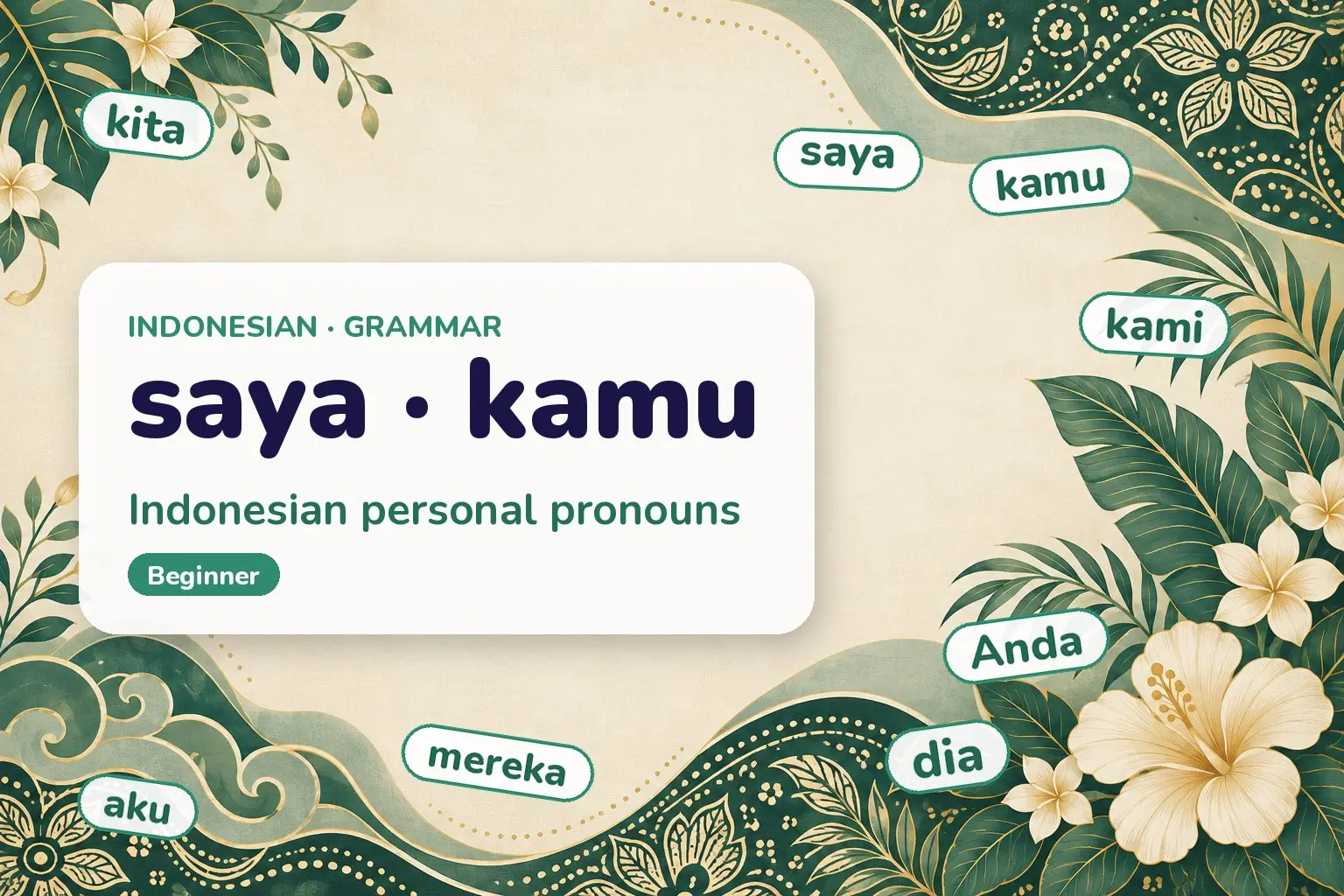
Indonesian pronouns don't change for gender or case. For 'I', use saya (neutral and polite) or aku (informal); for 'you', Anda (formal) or kamu (informal). 'We' has two words: kita includes the listener, kami doesn't. Dia means he or she, and mereka means they. Possession just follows the noun: buku saya = my book.
Level: beginner. Indonesian pronouns are refreshingly simple: no gender, no case changes, and no verb endings to match. The two things to get right are politeness and the two words for “we”.
The rule
| Pronoun | Use | |
|---|---|---|
| I | saya | neutral and polite — safe almost everywhere |
| I | aku | informal and intimate: close friends, family |
| you | Anda | formal and impersonal (always capital A): common in instructions, ads, forms; in conversation names or titles often sound more natural |
| you | kamu | informal: close friends, family, people you know well — it can sound too direct with strangers, even younger ones |
| he / she | dia (also ia in writing) | no gender distinction |
| he / she (respectful) | beliau | respectful third person for someone you wish to honour, often in formal contexts |
| we (including you) | kita | “you and I / all of us” |
| we (not including you) | kami | “my group, but not you” |
| you (plural) | kalian | informal; more formally Anda sekalian, or Bapak dan Ibu sekalian for an audience |
| they | mereka | people |
In everyday conversation, people often avoid “you” altogether with elders and strangers and use Bapak (Pak, for a man) or Ibu (Bu, for a woman) instead.
Possession
Put the pronoun after the noun: buku saya (my book), rumah mereka (their house). With informal pronouns you can also use short endings: bukuku (my book), bukumu (your book), bukunya (his/her book).
Example sentences
- Saya guru. — I am a teacher. (no word for “am” needed)
- Aku lapar. — I’m hungry. (informal)
- Apakah Anda dari Singapura? — Are you from Singapore? (formal)
- Kamu mau ke mana? — Where are you going? (informal)
- Dia dokter. — He / She is a doctor.
- Kita makan bersama, ya. — Let’s eat together (all of us).
- Kami dari Jakarta. — We (not you) are from Jakarta.
- Mereka teman saya. — They are my friends.
- Ini rumah saya. — This is my house.
- Beliau kepala sekolah. — He / She is the school principal. (respectful)
Common mistakes
- ❌ Saying kami when you mean you and the listener → ✅ kita. Kita pergi sekarang? “Shall we (you and I) go now?”
- ❌ Using kamu with a stranger or an older person → ✅ Anda, or Bapak/Ibu.
- ❌ Saya buku for “my book” → ✅ buku saya. The owner comes after the noun.
- ❌ Looking for a separate “she” → ✅ dia covers both he and she.
Compared with…
- English — one “we” and one “you”; Indonesian splits both by meaning and politeness.
- Malay — closely related; standard forms are often understandable across both, but everyday vocabulary, pronunciation and slang differ, including some pronoun preferences. Next steps are in the Indonesian grammar section.
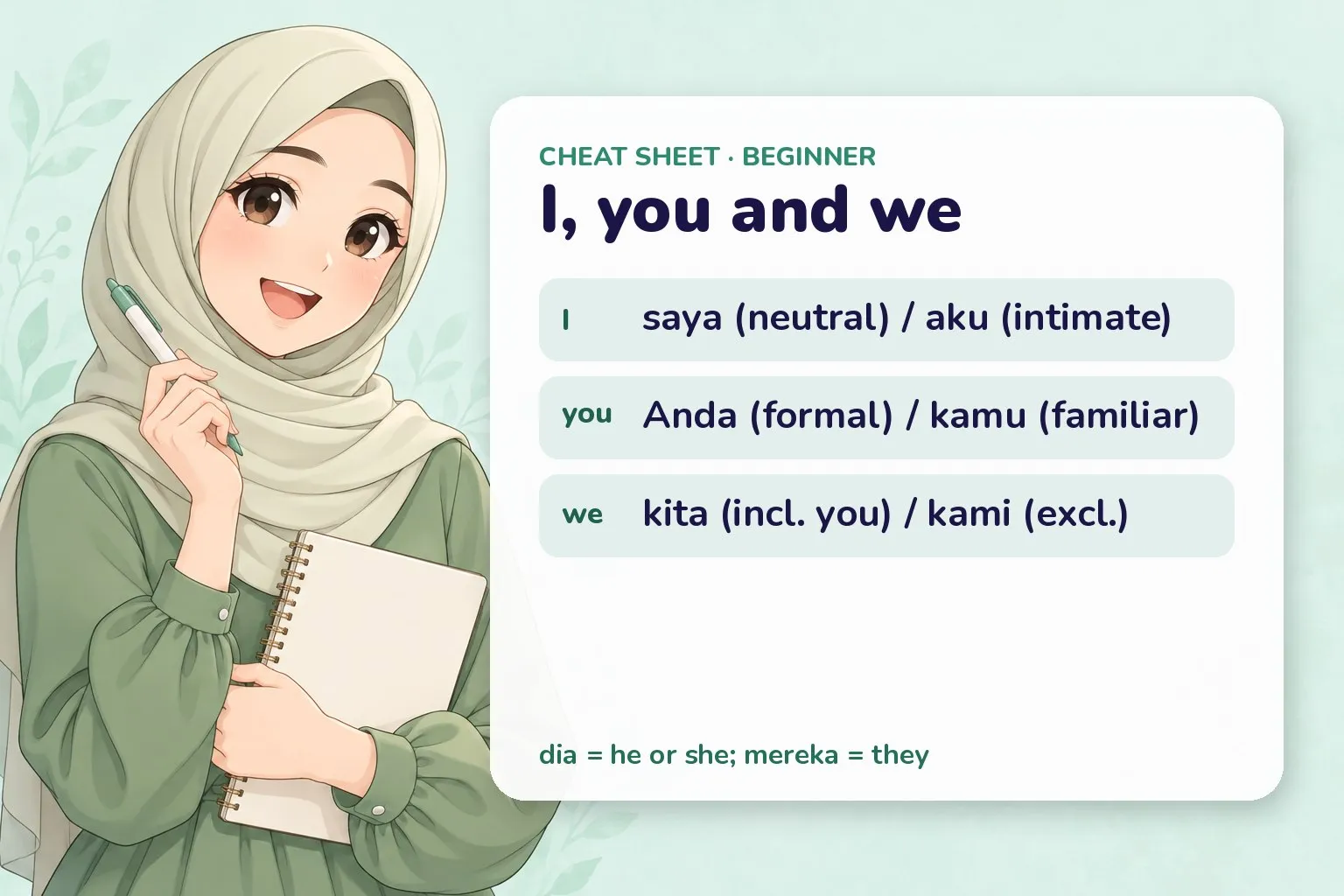
Quick recap before the quiz.
Mini quiz
- Polite word for “I”:
- “We” including the listener:
- Formal “you”:
- “My house” (polite):
- One word for “he” and “she”:
Answers
- saya
- kita
- Anda
- rumah saya
- dia
Sources
- Rules and forms checked against KBBI and the official EYD spelling guide (Badan Bahasa).
- This topic sits at beginner level in common course sequencing; BIPA levels are used as a general reference, not as an official topic list.
- Example sentences were written for this lesson; no third-party sentences were copied.
Next
- Back to the Indonesian grammar section
- New here? Start with Start Learning Indonesian Here
Sources
- KBBI Daring (official dictionary) — Badan Pengembangan dan Pembinaan Bahasa
- Ejaan Bahasa Indonesia yang Disempurnakan (EYD V) — Badan Pengembangan dan Pembinaan Bahasa
- BIPA Daring — Badan Pengembangan dan Pembinaan Bahasa